7 Backyard Design Trends That May Look Dated Soon
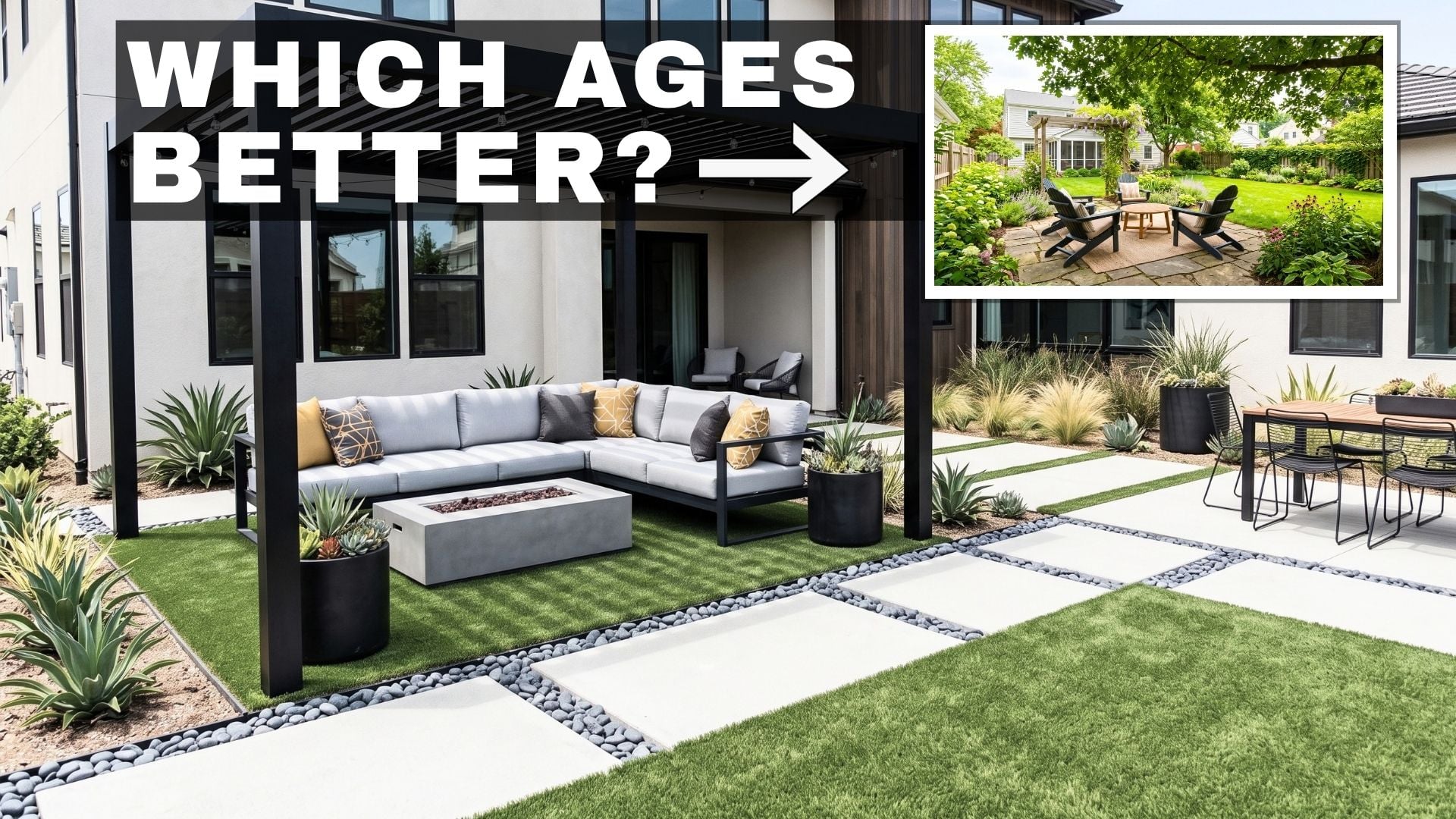
Some backyard features look fantastic when they're first installed. They're polished, dramatic, and exactly what you keep seeing in professionally designed spaces.
The problem is that the more permanent a backyard decision becomes, the more expensive it is to change when tastes—or your lifestyle—move on.
Replacing an outdoor chair is easy. Removing a sunken patio, rerouting utilities, or tearing out thousands of pounds of concrete is not.
That doesn't mean trends are automatically bad. Most become popular because they're solving a real problem. But before making a major investment, it's worth separating the useful design principle from the trendy way it's currently being expressed.
What Makes a Backyard Trend Likely to Look Dated?
Backyard features are more likely to age poorly when they're permanent, visually dominant, highly specialized, or tied to one particular lifestyle or aesthetic.
The safer approach isn't to avoid contemporary design. It's to ask whether the underlying function could be achieved in a simpler or more adaptable way. The more expensive and difficult a decision will be to undo, the stronger its reason for existing should be.
Prefer to Watch?
1. Sunken Conversation Pits Make a Big Commitment to One Look
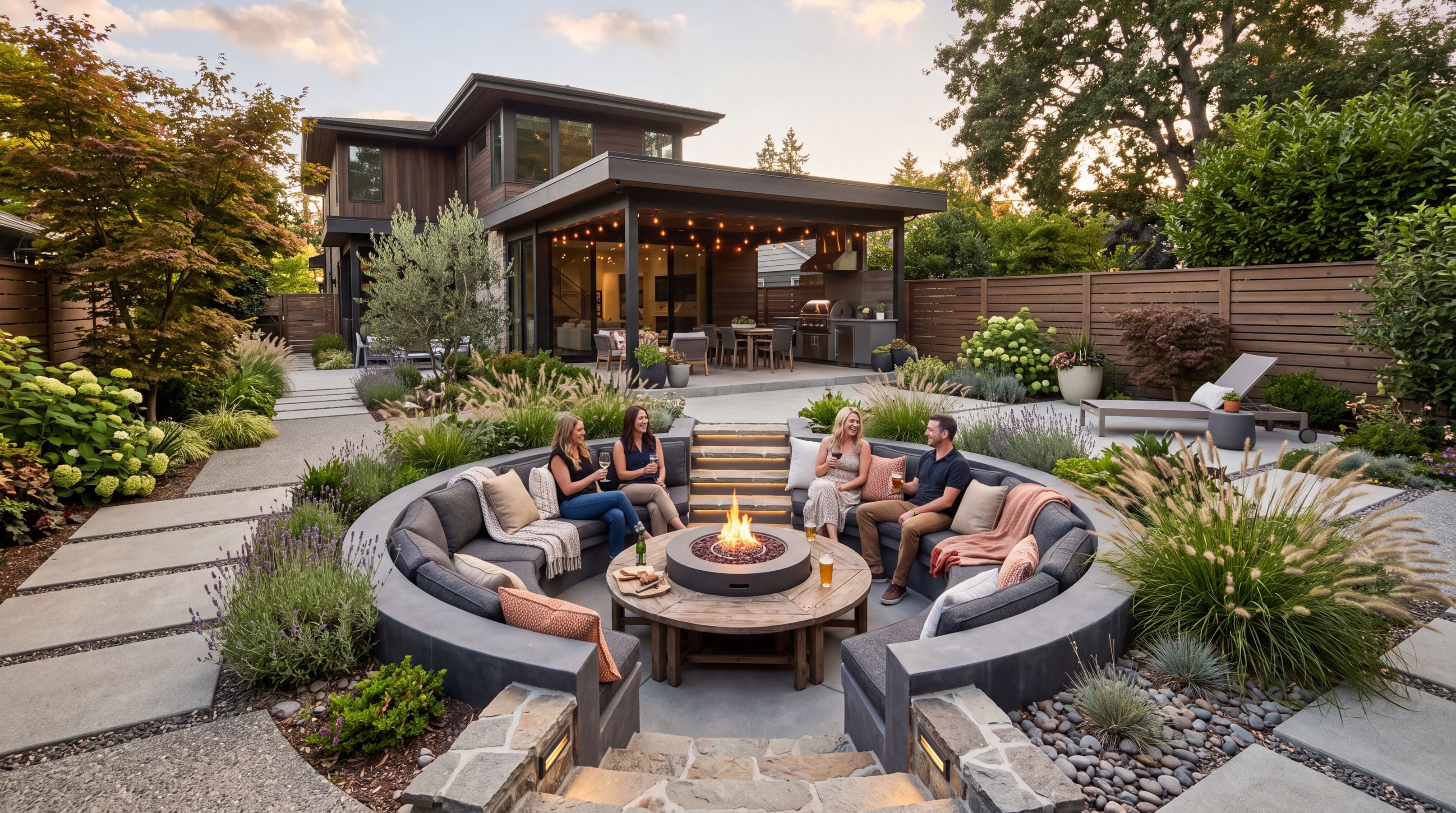
The outdoor conversation pit has returned.
The idea is familiar: a seating area drops below the surrounding patio, built-in benches or couches face inward, and a fire feature or table usually anchors the center.
It's easy to understand the appeal.
Everyone faces one another. The lowered space feels protected. A large patio gains a clear destination. And the seating area feels more intimate than furniture floating in the middle of an open surface.
Those are all good design goals.
The question is whether you need the pit itself to achieve them.
Once you're excavating the yard, building retaining walls, dealing with drainage, and organizing the surrounding hardscape around that lowered area, you've made a permanent commitment to a very recognizable feature.
Instead, consider what you actually want from the design.
If the goal is conversation, movable chairs can face inward. If you want enclosure, planting or a low wall can create it. A central fire feature can still give the space a focal point. Even modest grade changes can help distinguish one outdoor area from another.
None of that means a sunken conversation pit is a bad choice if you genuinely love it.
Just make sure you're in love with the feature itself—not merely the lifestyle shown in the photograph.
2. Giant Paver Grids Can Become the Entire Identity of the Yard
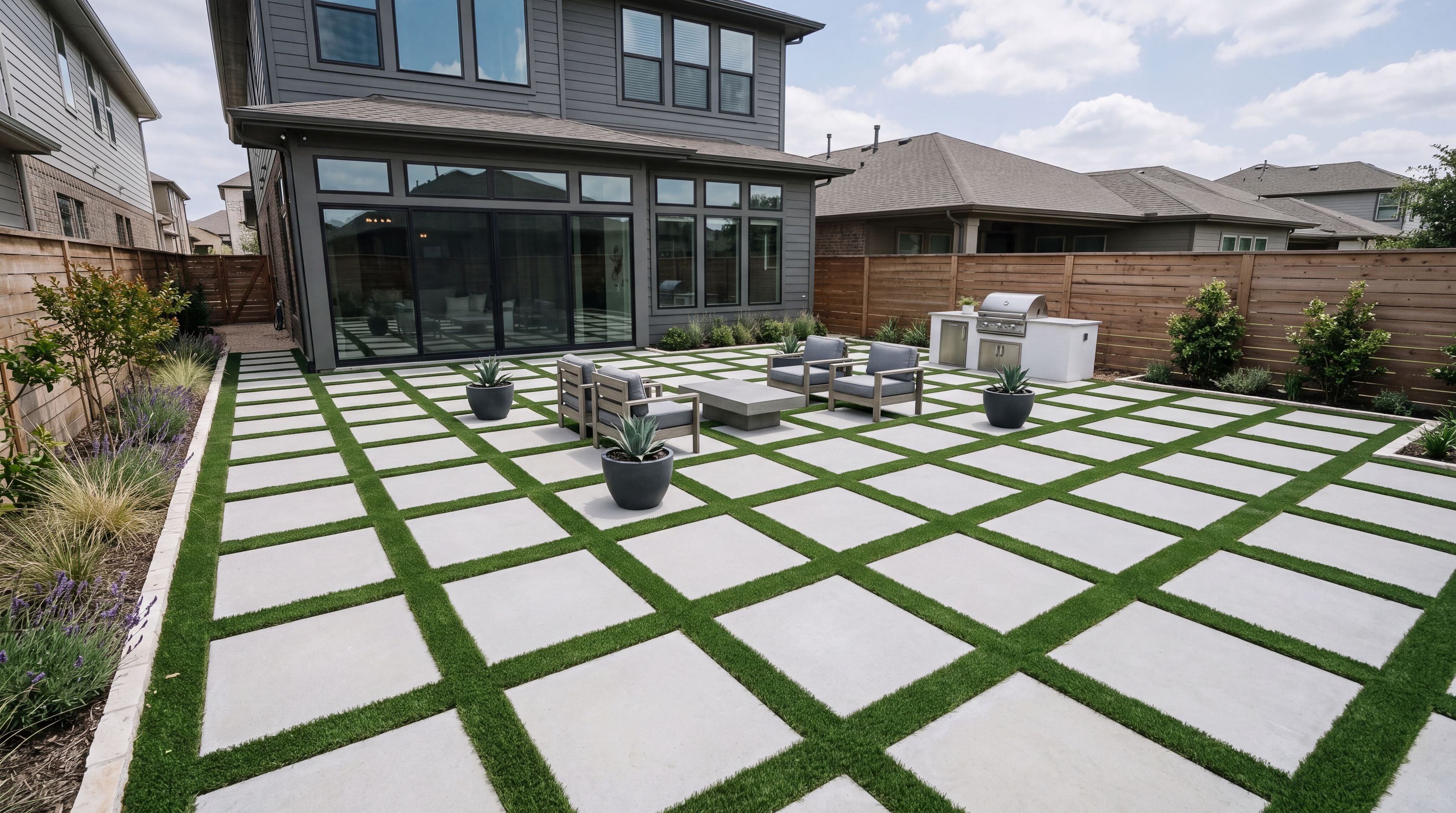
Large square pavers separated by wide strips of grass or artificial turf create one of the most recognizable contemporary backyard looks.
And there's a reason they're popular.
The geometry is clean. The materials photograph beautifully. From above, especially, the repeated grid can create a very striking composition.
But that visual strength can also become the problem.
A patio should usually support the rest of the landscape. When a bold geometric pattern covers a large percentage of the backyard, the paving can stop behaving like the floor and start becoming the entire design.
Highly recognizable materials and patterns also tend to timestamp a renovation.
Large-format pavers themselves aren't the issue. They can work beautifully when their scale and placement make sense.
The risk comes from letting one fashionable pattern dominate almost everything else.
If you like the look, consider using it more selectively. Let planting interrupt some of the geometry. Use the pattern around circulation routes or seating areas where it serves a practical purpose rather than extending it across every available surface.
The stronger the pattern, the more restraint can help it age gracefully.
3. Outdoor Kitchens Can Outgrow the Way You Actually Live
Outdoor cooking can start with a very simple need.
You want a grill.
Then some counter space would be useful.
Storage makes sense below it.
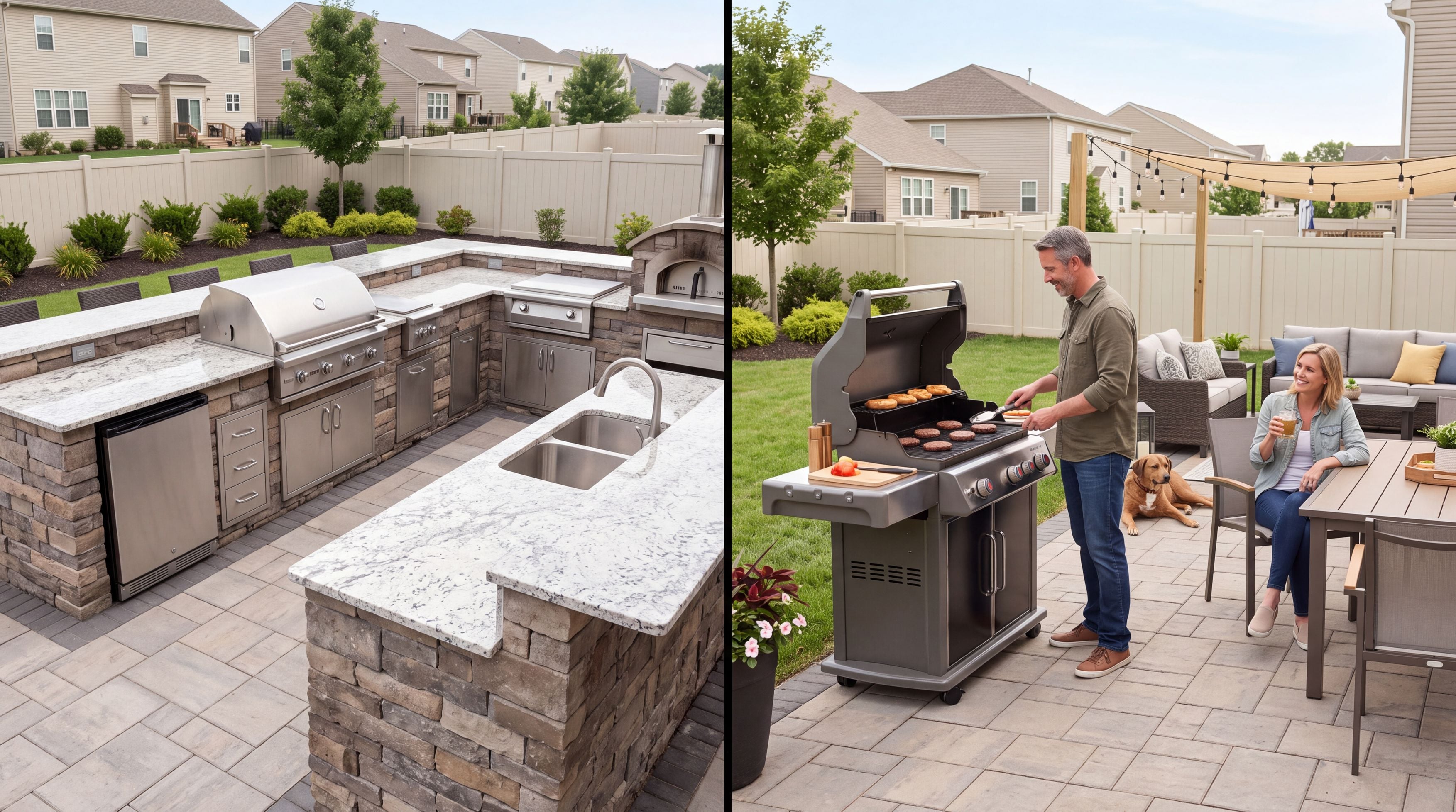
Maybe you add a sink. A refrigerator. A burner. A pizza oven. An ice maker. A television.
Eventually, what began as a place to grill dinner becomes another full kitchen.
For homeowners who entertain frequently and genuinely cook outside, that level of infrastructure may make perfect sense.
But before building it, ask an important question:
What do I actually do outside?
Permanent counters and masonry may remain in the landscape for years, while appliances, technology, finishes, and the way your household uses the space may change much faster.
That makes function more important than the feature list.
If you grill several nights a week and regularly entertain groups of people, substantial prep space and storage might be genuinely useful.
If what you normally need is a grill, a work surface, and somewhere to set a drink, you may not need an entire outdoor room filled with appliances.
Design around your habits instead of designing around everything that could theoretically be installed.
4. Too Many Outdoor “Rooms” Can Make a Yard Less Flexible
Creating outdoor rooms is useful garden-design advice.
A dining area feels more intentional when it's clearly defined. A fire-pit area benefits from enclosure. Separating cooking from circulation can make the yard easier to use.
The problem begins when every activity gets its own permanent zone.
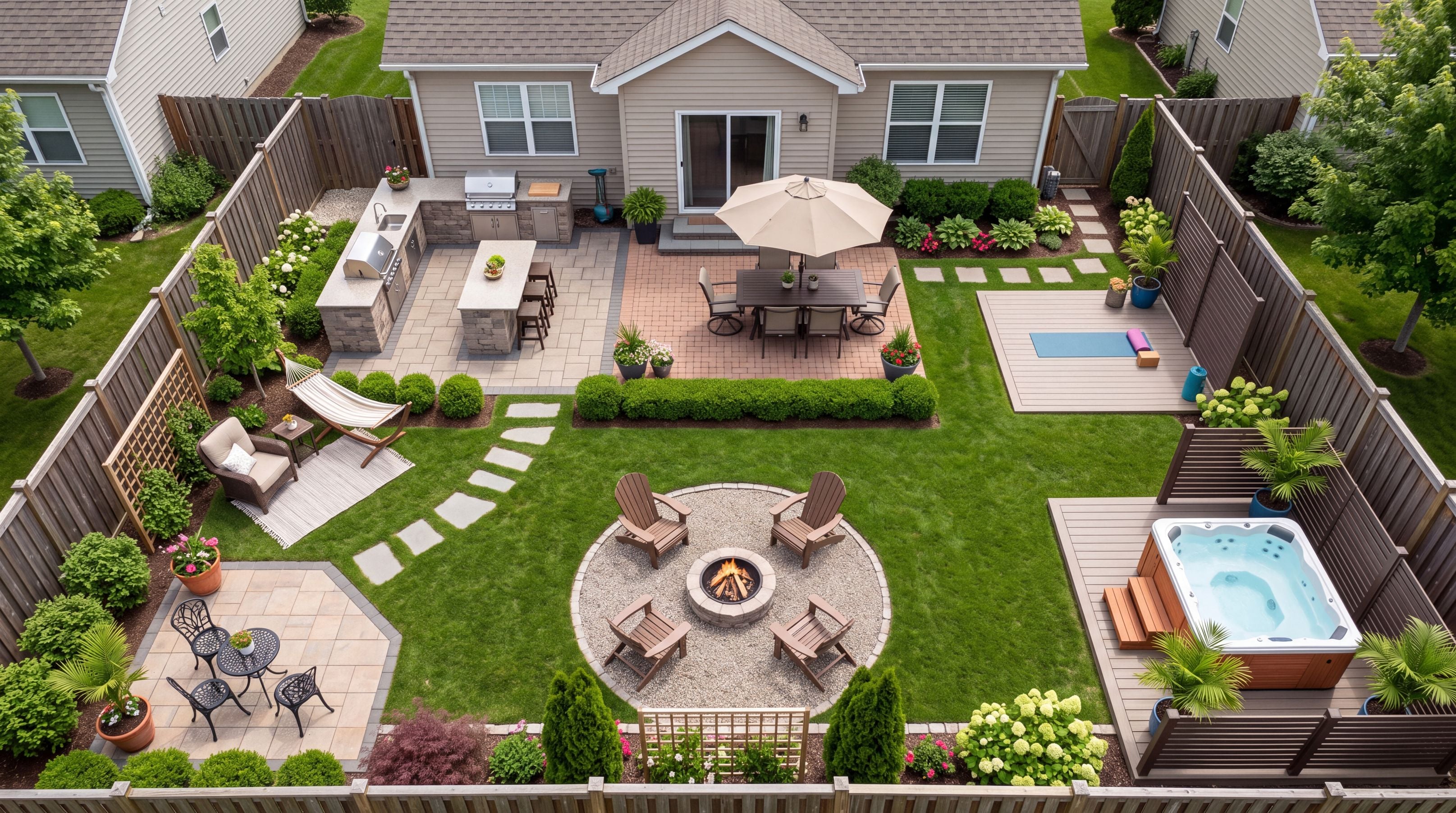
A typical suburban backyard can quickly acquire a dining zone, outdoor kitchen, fire-pit area, reading corner, yoga space, coffee area, hot-tub zone, and several separate paths connecting everything together.
At some point, the yard starts functioning like a floor plan.
But people don't necessarily use outdoor space that neatly.
The table where you eat dinner might also be where you drink coffee in the morning. Four chairs around an open patio may move when twenty people visit. An open area your children use today could become something completely different later.
Unused space isn't always wasted space.
Sometimes its value comes from the fact that you haven't permanently decided what must happen there.
On a large property, multiple dedicated outdoor rooms may work beautifully. On a normal suburban lot, it can be smarter to create fewer spaces that do more things.
5. Wellness Features Work Best When the Habit Comes First
Backyards are increasingly being treated as places to relax, recover, and spend intentional time outside.
That's a good goal.
The risk is turning every current wellness habit into permanent landscape infrastructure.
A sauna, cold plunge, meditation platform, outdoor shower, or dedicated yoga area might be something you use for years.
Or it might reflect what you're excited about right now.
The important distinction is between creating a relaxing landscape and permanently designing the landscape around one particular routine.
If you've used a sauna regularly for years and know it's part of your lifestyle, an outdoor sauna may be a very reasonable investment.
If you've recently discovered a new activity and aren't sure whether it will still matter to you several years from now, flexibility has value.
A freestanding feature can move.
An open patio can support yoga today, extra seating tomorrow, and something else entirely later.
You can always make a feature more permanent once you understand how much you actually use it.
It's much harder to turn permanent construction back into flexible space.
6. High-Tech Pergolas Mix Two Things That Age Very Differently
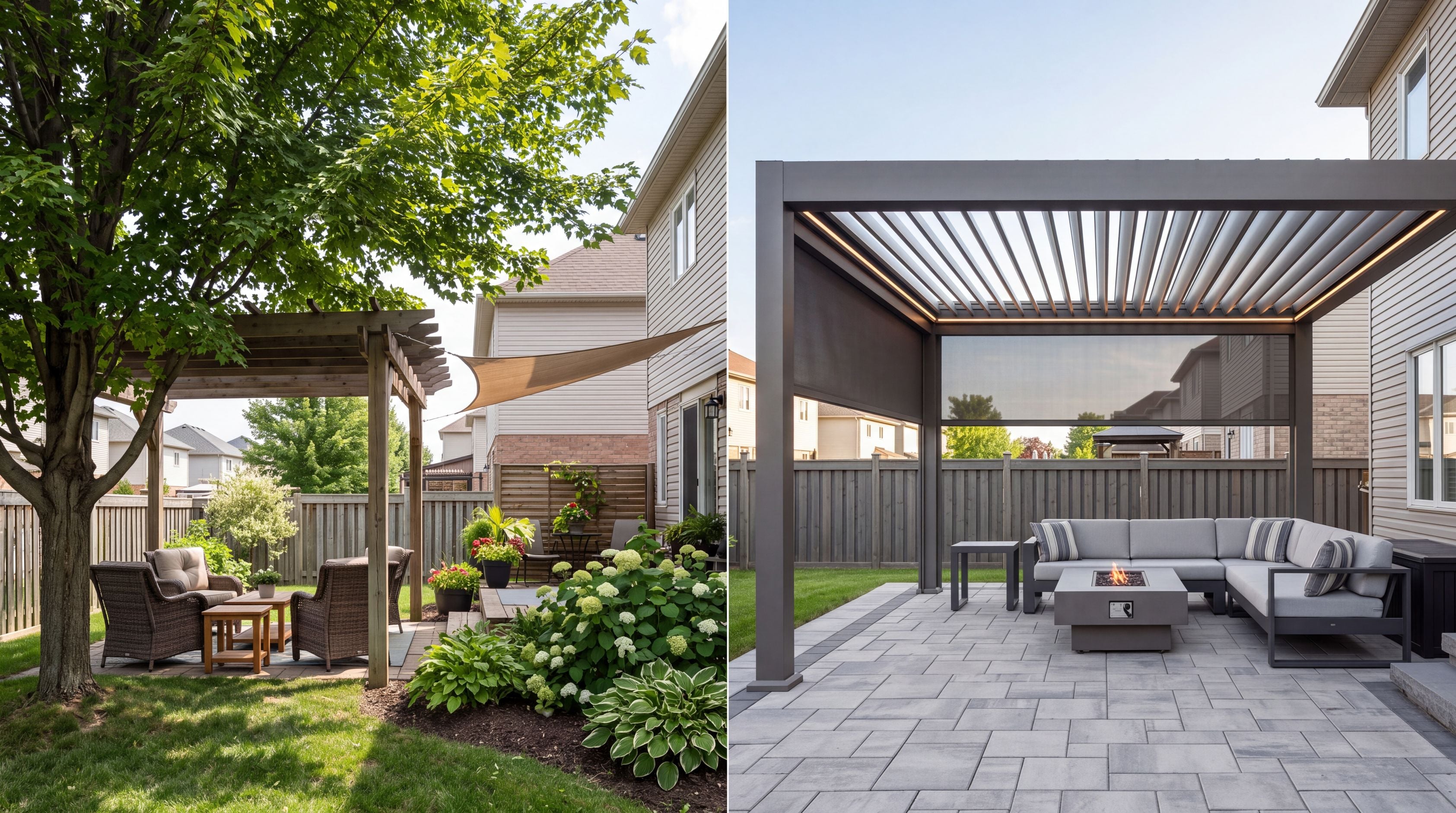
A simple pergola has a fairly straightforward job: create overhead structure and provide some degree of shade or enclosure.
Today, that same goal can include motorized louvers, retractable screens, heaters, lighting, speakers, drainage systems, sensors, and electronic controls.
Some of those features can make an outdoor space significantly more useful.
But they also introduce something landscapes haven't traditionally had to deal with at the same scale: technology.
Plants and electronics age very differently.
A tree planted today may become substantially more useful as it matures. An electronic control system won't improve simply because another twenty years have passed.
That doesn't mean a sophisticated pergola is automatically a bad investment.
It means the structure should still make sense if some of the technology eventually becomes obsolete, needs repair, or becomes difficult to replace.
Before building one, ask:
What functionality do I actually need?
Would the structure still be useful if one of the systems stopped working?
Could a simpler pergola, tree, shade sail, or combination of solutions accomplish most of the same job?
Complexity is worthwhile when the functionality matters to you.
It's less compelling when the complexity itself is what makes the feature feel impressive.
7. Naturalistic Gardens Still Need Visible Design
Naturalistic planting isn't the problem.
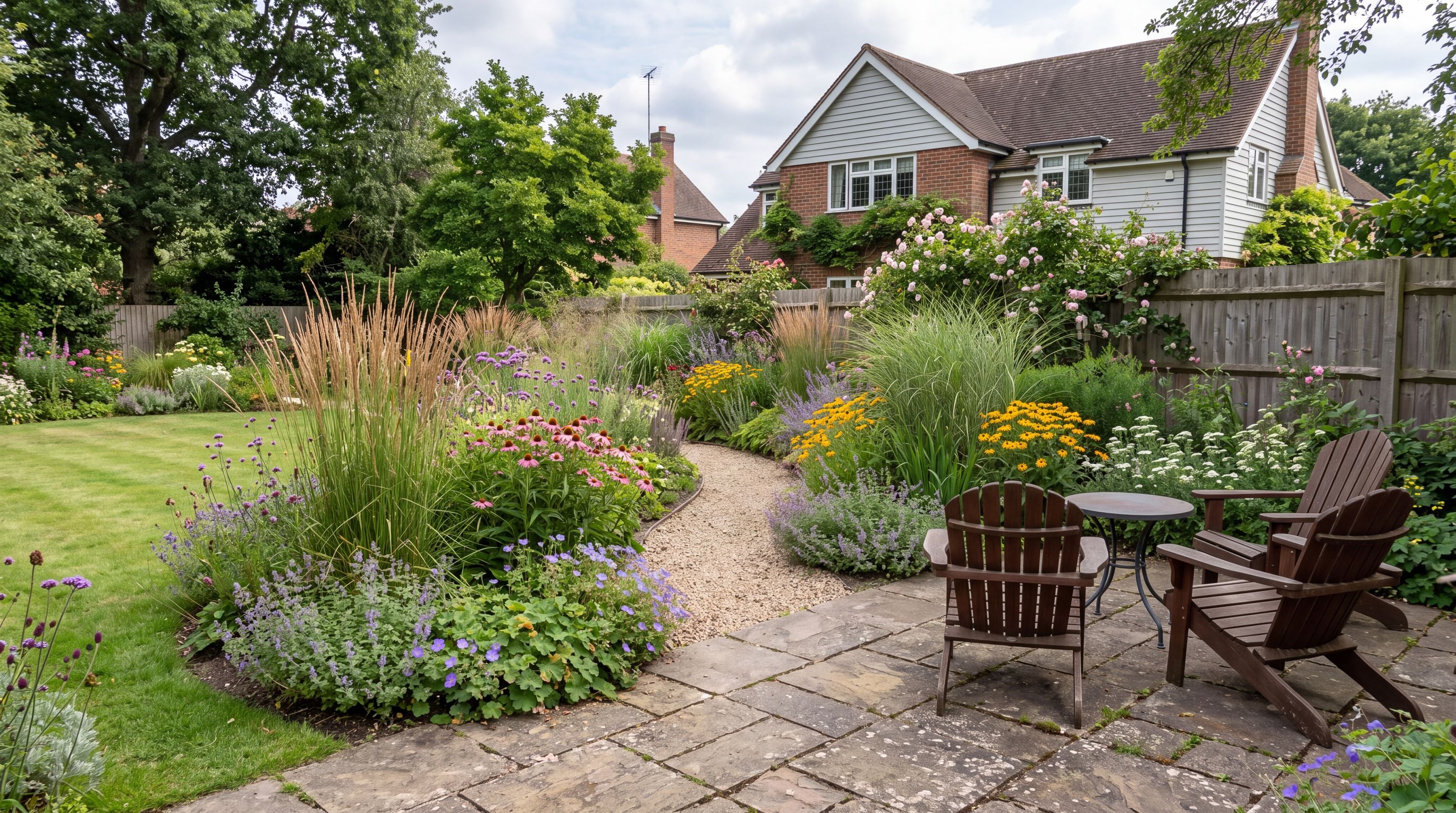
Grasses, loose perennial drifts, meadow-inspired landscapes, and less formal planting can create beautiful gardens.
The mistake is assuming that because a garden looks natural, it doesn't need much design.
Remove the lawn, scatter plants across the space, let everything wander, and skip clear edges, repetition, paths, or structural planting—and the result may not read as intentionally naturalistic.
It may simply look accidental.
A loose garden still needs something to organize it.
A strong edge can make informal planting feel deliberate.
Repeated plants can visually connect a wide range of species.
A path gives the eye—and the homeowner—somewhere to go.
Shrubs, grasses, or evergreen structure can help carry the composition when flowering plants aren't at their peak.
That's the interesting contradiction of naturalistic design:
The wilder you want the planting to feel, the more important it can be to provide a few clear signals that the wildness is intentional.
You don't have to make the garden formal.
You simply need enough structure for the relaxed planting to make sense.
Choose the Function Before You Choose the Trend
Trends aren't inherently bad.
Conversation pits create connection. Outdoor kitchens can make entertaining easier. Shade structures make patios more comfortable. Naturalistic planting can create a softer, more relaxed garden.
Most popular ideas became popular because they're solving something people genuinely want.
The problem starts when the trend becomes more important than the reason you wanted it.
If you're buying an outdoor chair and eventually decide it looks dated, replacing it is simple.
If you're excavating the yard, pouring concrete, installing utilities, or reorganizing the entire landscape, the decision deserves a much longer life.
A useful rule is this:
The more permanent, expensive, specialized, and visually dominant a backyard decision becomes, the less its main justification should be “this is what everyone is doing right now.”
Start with what you want the yard to do. Then choose the simplest design that does that job well.