7 Old-School Yard Ideas Worth Bringing Back
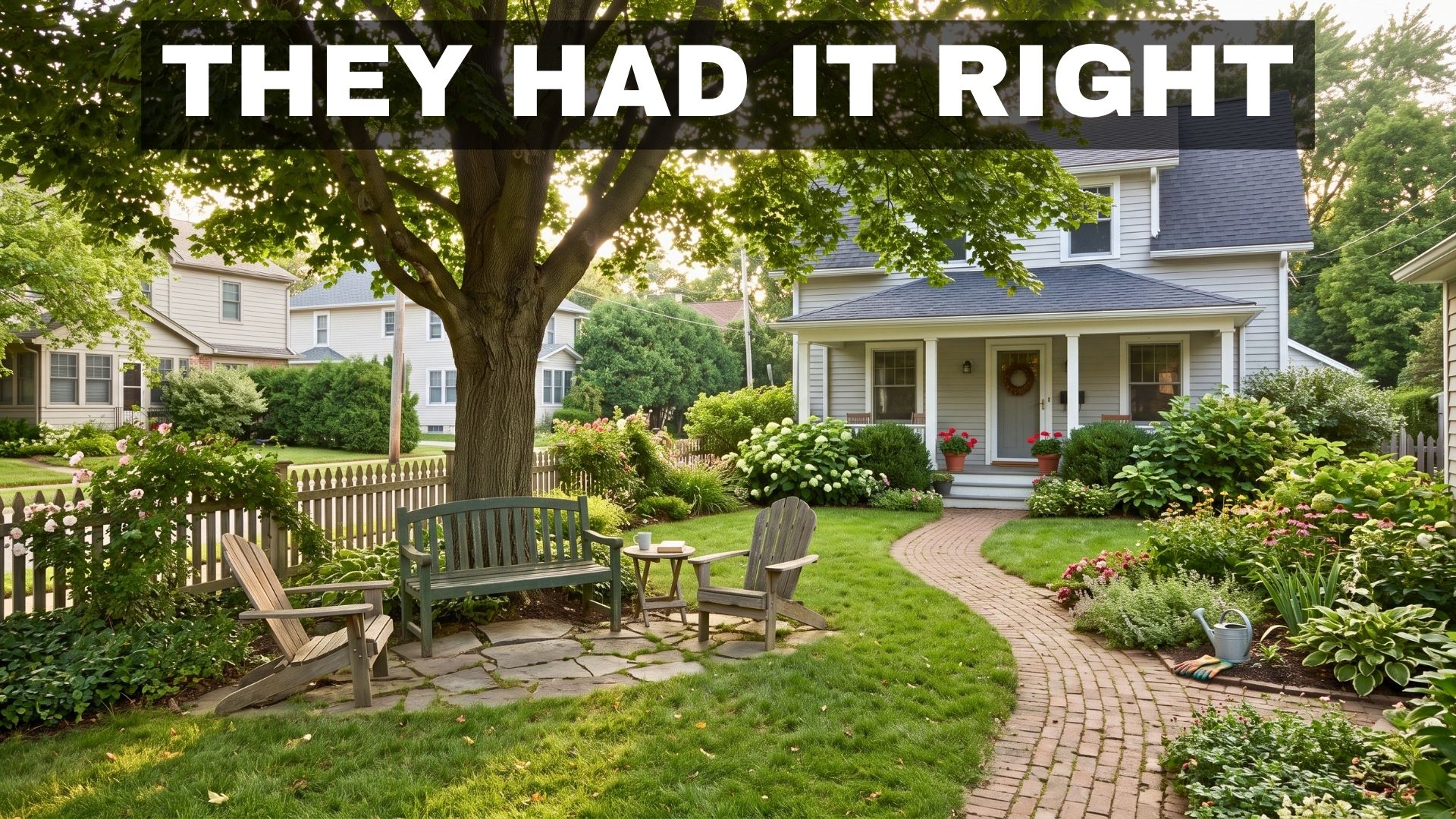
Walk through a newer neighborhood and many front yards follow a familiar formula: a nice lawn, foundation shrubs, maybe an ornamental tree, and a clean walkway to the front door.
Everything looks finished.
But sometimes something is missing: a reason to actually use the yard.
Older landscapes weren't automatically better, and plenty of old gardening habits are best left in the past. But many older yards were designed with a different set of expectations. Trees were planted for the shade they might provide decades later. Utility areas were allowed to be practical. Plants created walls, entrances, and outdoor rooms. And nobody expected a new landscape to look mature the day it was planted.
Those are ideas worth reconsidering.
What Can We Learn From Older Yard Designs?
Many older landscapes treated the yard as something that would work, grow, and improve over time, not simply something that needed to look finished immediately.
The best ideas to borrow aren't necessarily particular plants or nostalgic garden styles. They're bigger design principles: give people a reason to use the yard, let plants perform useful jobs, plan for mature growth, concentrate utility instead of hiding it everywhere, and allow the landscape time to become what it was designed to be.
Prefer to Watch?
1. Give the Front Yard a Reason to Be Used
Many modern front yards are designed almost entirely around curb appeal.
You walk through them on the way from the driveway to the door. You mow them. You prune the shrubs. You look at them from the street.
But you don't necessarily spend time in them.
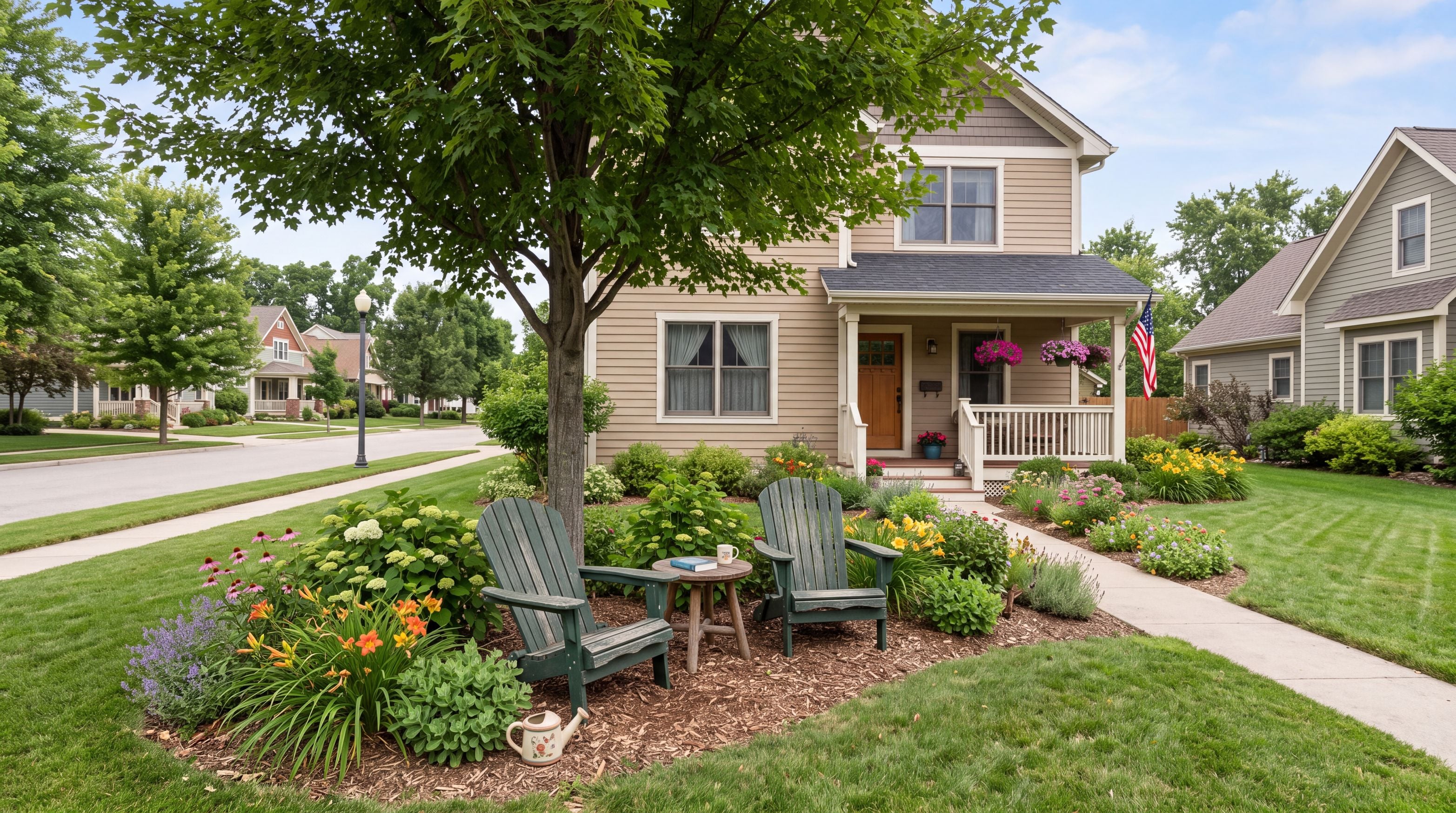
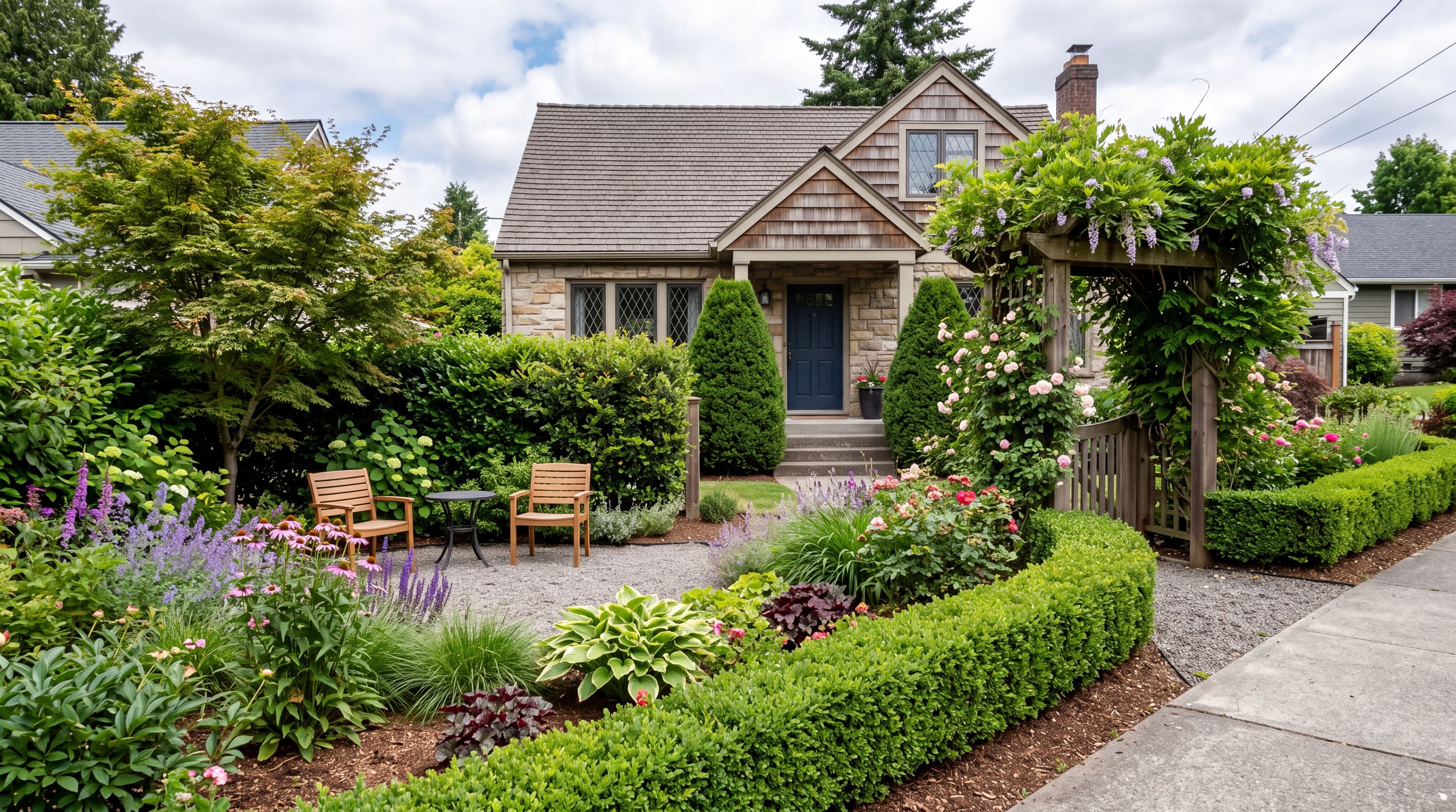
Older homes often created a small human-scale destination near the front of the property. A porch certainly helped, but it didn't always require architecture. It might have been a bench beneath a tree, two chairs near the entry, a wide front step, or even a low wall that was comfortable enough to sit on.
That small change affects how the surrounding landscape works.
A shade tree isn't just an attractive specimen anymore; it's shading a place where someone might sit. Flowers beside the seating area are experienced up close instead of viewed from the driveway. A walkway becomes part of an inhabited space rather than simply a path to the door.
You don't need to rebuild the front of your house to borrow this idea. Look at what already exists.
Could two simple chairs fit beneath a mature tree? Could a bench overlook the sidewalk? Is there already a comfortable front step that could feel more intentional with planting around it?
The goal isn't to turn the front yard into a second backyard. It's simply to give it a job beyond being looked at.
2. Plant Trees for the Yard You'll Have Years From Now
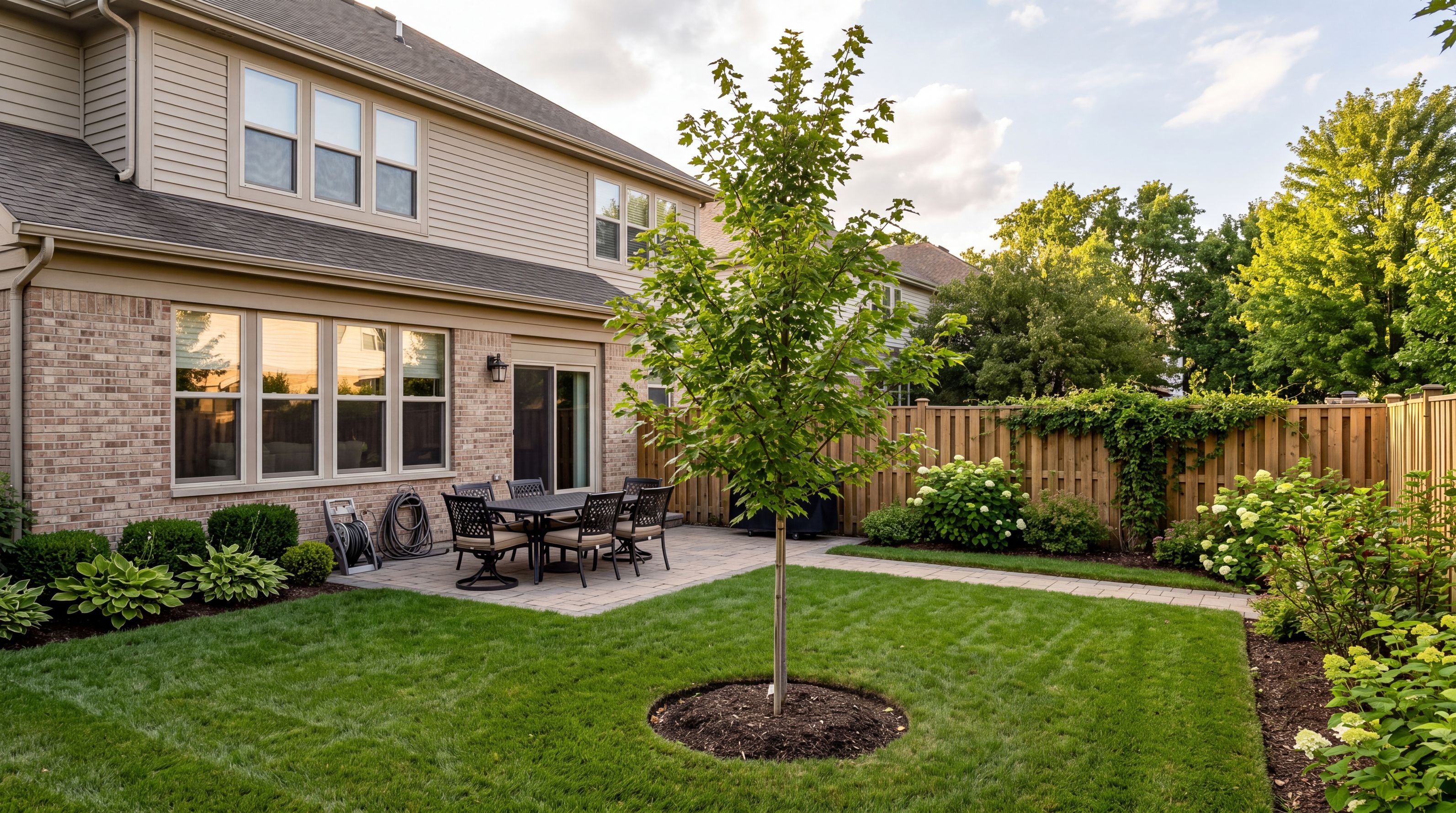
Think about a newer backyard on a hot summer afternoon.
The patio is exposed, so the natural response is to start looking for an umbrella, shade sail, pergola, or covered structure.
Those can all be reasonable solutions.
But drive through an older neighborhood on the same kind of afternoon and you may notice something different. Sidewalks disappear beneath tree canopy. Parts of the house are shaded. A patio or seating area feels protected.
Often, that comfort exists because somebody made a landscaping decision decades earlier.
They planted a tree that was expected to become large enough to matter.
That's a useful shift in how we think about tree placement. Instead of only asking:
Where will this tree look good right now?
Also ask:
What could this tree eventually do for the property?
Depending on the site, a well-placed tree may eventually help shade a patio, soften the house, add privacy above fence height, frame a view, or give a flat yard stronger vertical scale.
That doesn't mean planting the largest tree possible wherever there's open lawn. The point is to think about the tree's future role, not simply the empty spot it fills today.
Some of the most valuable trees in established neighborhoods were planted by people who never saw them at their mature best.
That's long-term landscape design.
3. Let One Part of the Yard Be the Working Side
Real yards contain real stuff.
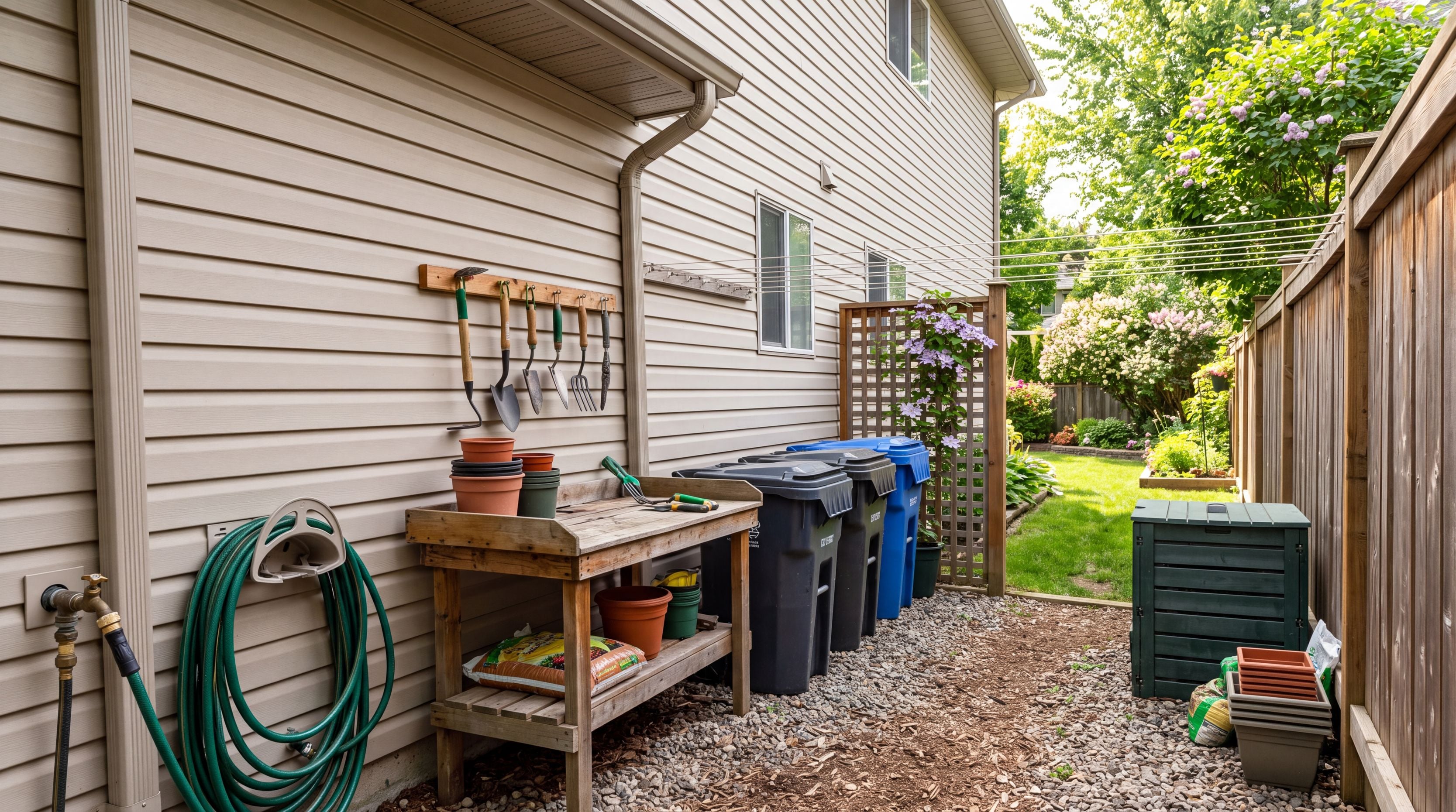
Hoses. Garbage bins. Extra pots. Potting soil. Wheelbarrows. Compost. Garden tools. Children's outdoor gear.
The problem isn't owning those things.
The problem is designing a yard as though none of them exist.
When every visible part of the property is expected to be decorative, practical items tend to migrate everywhere. A hose lands beside one bed. Empty pots collect near the patio. Tools lean against the house. The wheelbarrow lives wherever it was last used.
Individually, none of those things is a big problem. Collectively, they can make an otherwise attractive yard feel visually scattered.
Older properties were often more comfortable admitting that one portion of the yard was for work.
It might have been a side yard, back corner, potting area, compost zone, or utility space. It wasn't necessarily ugly or neglected. It simply wasn't expected to perform the same decorative job as the rest of the landscape.
That idea still works.
Group the bins together. Put tool storage where the tools are actually used. Keep the hose near the faucet. Stack extra pots in one place. Give soil, compost, and messy gardening jobs a home.
You don't need to disguise every practical object individually if you can consolidate most of them into one intentional zone.
Free Garden Design Guide
If you're trying to figure out the bigger design of your own yard, download the free 5 Yard Design Moves That Fix Almost Any Outdoor Space guide.
4. Use Plants to Create Structure, Not Just Decoration
A yard can contain plenty of attractive plants and still feel strangely undefined.
There's an interesting shrub beside the house. A decorative grass near the patio. A specimen tree in the lawn. Some flowering perennials along the fence.
Everything is landscaped.
But nothing is really organizing the space.
Older landscapes often asked plants to perform architectural jobs.
A hedge became a wall.
A vine-covered arbor marked an entrance.
A substantial shrub framed a doorway.
A row of planting separated one part of the property from another.
Instead of asking only:
What interesting plant should I put here?
Try asking:
What does this space need a plant to do?
Does it need to define an edge? Block an unwanted view? Mark the transition into another part of the garden? Guide someone toward a path? Make a seating area feel more protected?
That question changes plant selection from decoration to problem-solving.
You may not need more plants at all. You may simply need the plants you add to create clearer structure.
5. Mix Useful Plants Into the Landscape—Carefully
Productive plants don't always need to live in a completely separate vegetable garden.
Older yards frequently mixed useful plants into the everyday landscape: herbs near the kitchen, berries along a fence, rhubarb in a sunny bed, grapes growing over a simple structure, or a fruit tree standing in the lawn.
There's a lot to like about that idea, but it comes with an important warning.
A fruit tree in the lawn sounds idyllic when you're imagining picking fresh fruit from your own yard.
The less romantic side may include fallen fruit, insects, pruning, disease management, cleanup, fruit thinning, and potentially more fruit than your household knows what to do with.
So the lesson isn't that every homeowner should add an orchard.
It's that an edible plant doesn't automatically require an entirely separate landscape project.
For many households, herbs near the kitchen door, berries incorporated along a fence, or a few edible plants mixed into a sunny bed can provide some of that usefulness with less commitment.
Start with the kind of useful plant you will actually use and maintain.
6. Let Plants Provide Some of the Character
Outdoor structures can become expensive very quickly.
Want a beautiful garden destination? It's easy to start imagining a large pergola, decorative screens, built-in seating, custom details, and lighting.
But some older gardens achieve remarkable character with much simpler ingredients.
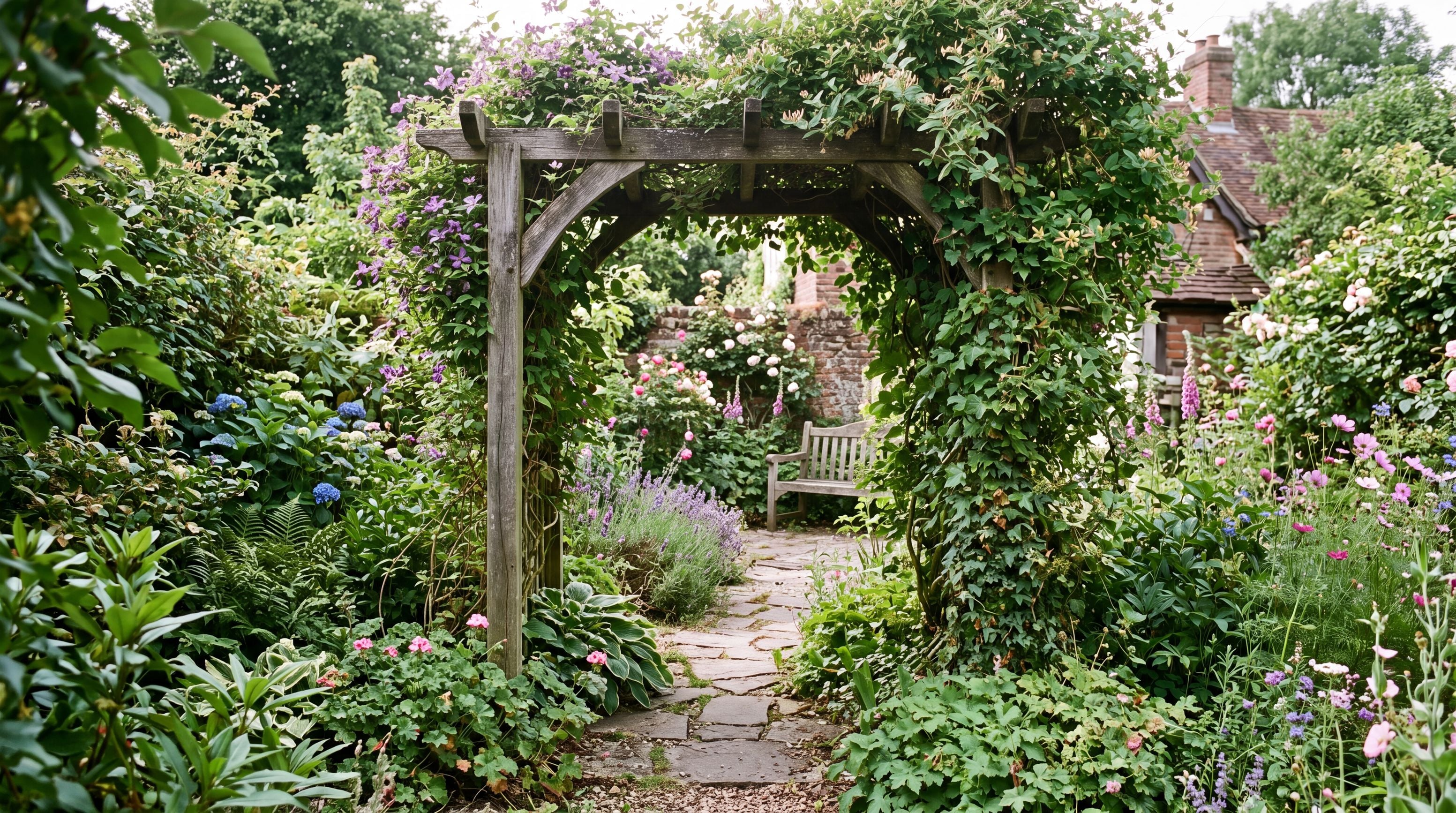
Look beneath a mature vine-covered arbor and the original structure may be nothing extraordinary: a few posts and a simple top.
The richness arrived later.
The vine matured. Nearby planting filled in. Materials weathered. Shade developed. The garden slowly softened the structure.
That's very different from asking the built feature to provide every bit of character on installation day.
A simple fence can become a backdrop for climbing plants.
A basic bench can feel completely different once a tree grows over it.
A modest arbor can eventually become a meaningful garden entrance.
Before making an outdoor structure more elaborate, ask whether a simpler framework combined with the right planting could actually become better over time.
7. Stop Expecting a New Landscape to Look Finished
This may be the most important old-school idea of all.
Modern landscape projects are often judged the moment they're installed.
The work is finished. The mulch is fresh. The plants go in. We take the picture.
Naturally, we want that picture to look complete.
That pressure can lead homeowners to plant shrubs too close together, fill every open area with another perennial, or keep adding features because young plants still look small.
But plants don't stop growing because installation day is over.
A yard that looks perfectly full in year one may simply become overcrowded later.
Older landscapes were often built around a much longer timeline.
The tree was supposed to get big.
The shrub was supposed to fill its space.
The vine was supposed to cover the arbor.
Perennials were expected to spread.
Shade was expected to arrive later.
In other words, installation day wasn't the finished landscape.
It was the beginning of it.
So when you're evaluating a new planting, don't only ask:
Does this look finished today?
Ask:
If these plants reach their mature size, does the design become better—or simply fuller?
Leaving some visible space around young plants isn't necessarily evidence that the landscape is incomplete. Sometimes it's evidence that the design has accounted for the future.
A Good Yard Doesn't Have to Be Finished Yet
Bringing back old-school yard ideas doesn't mean recreating somebody else's 1950s landscape.
The more useful lesson is how those yards were often expected to behave.
They could contain working areas. Plants could perform jobs. Trees could be planted for a future owner to enjoy. A simple structure didn't need to look spectacular immediately. And an unfinished-looking young landscape wasn't necessarily considered a problem.
That's still a useful way to design.
Before adding another plant or another feature because something feels empty, look at the larger plan. Ask what the space needs to do, what your existing plants will become, and what might actually improve if you give it time.
Sometimes the smartest landscape decision is not adding more.
It's creating the conditions for the yard you already have to become better slowly.