GARDEN GURU YARD STYLE BLUEPRINTS
Classic & Structured
Turn the style you love into a yard you know how to build.
You already know the look: balanced planting, clear hierarchy, repeated forms, defined edges, and a landscape that feels settled and intentional.
The harder part is figuring out how to create that order without making the yard feel rigid, formal, or overly symmetrical.
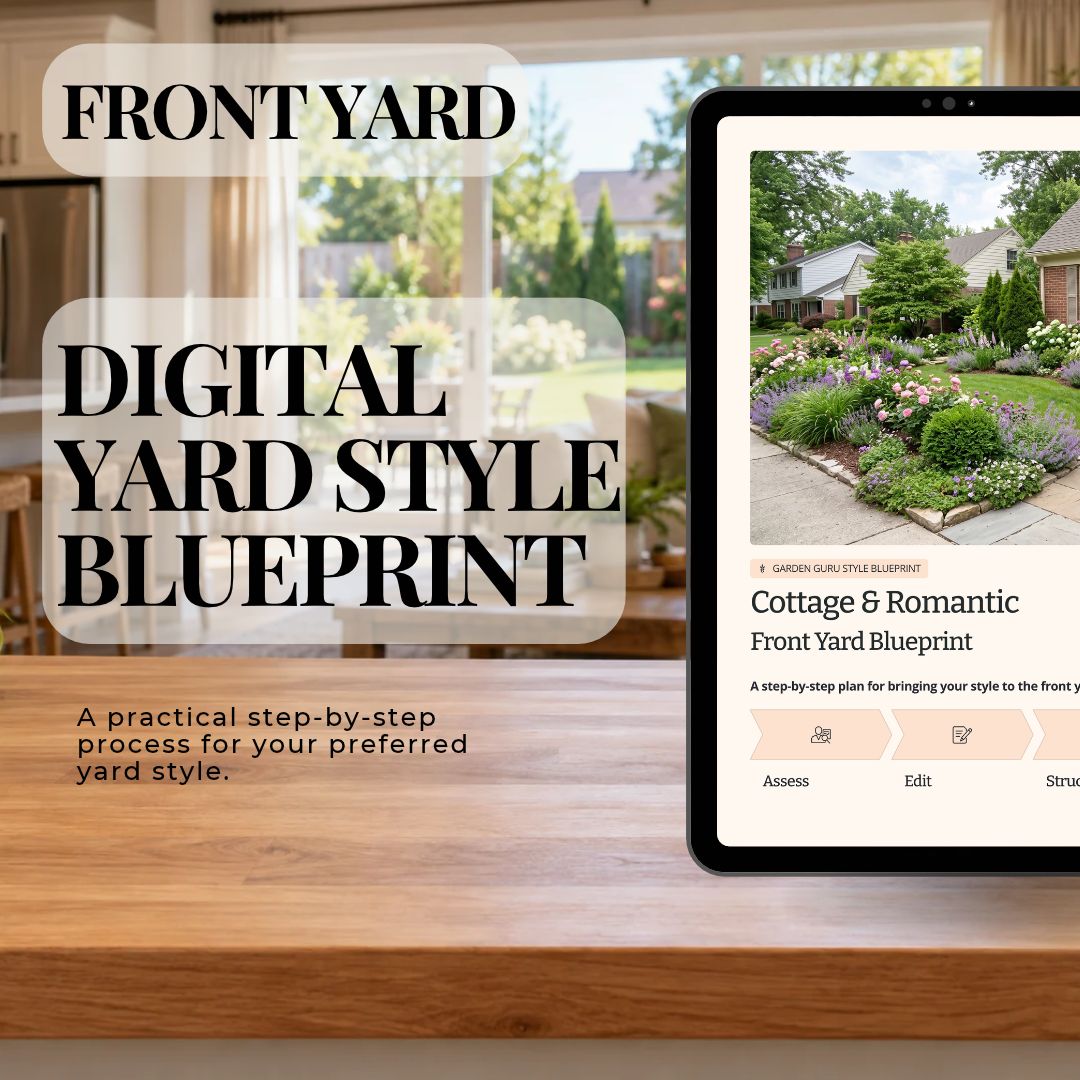
The Classic & Structured Blueprints turn the style into a practical step-by-step process for your front yard, backyard — or both.
Not sure this is your style? Take the free Yard Style Finder →
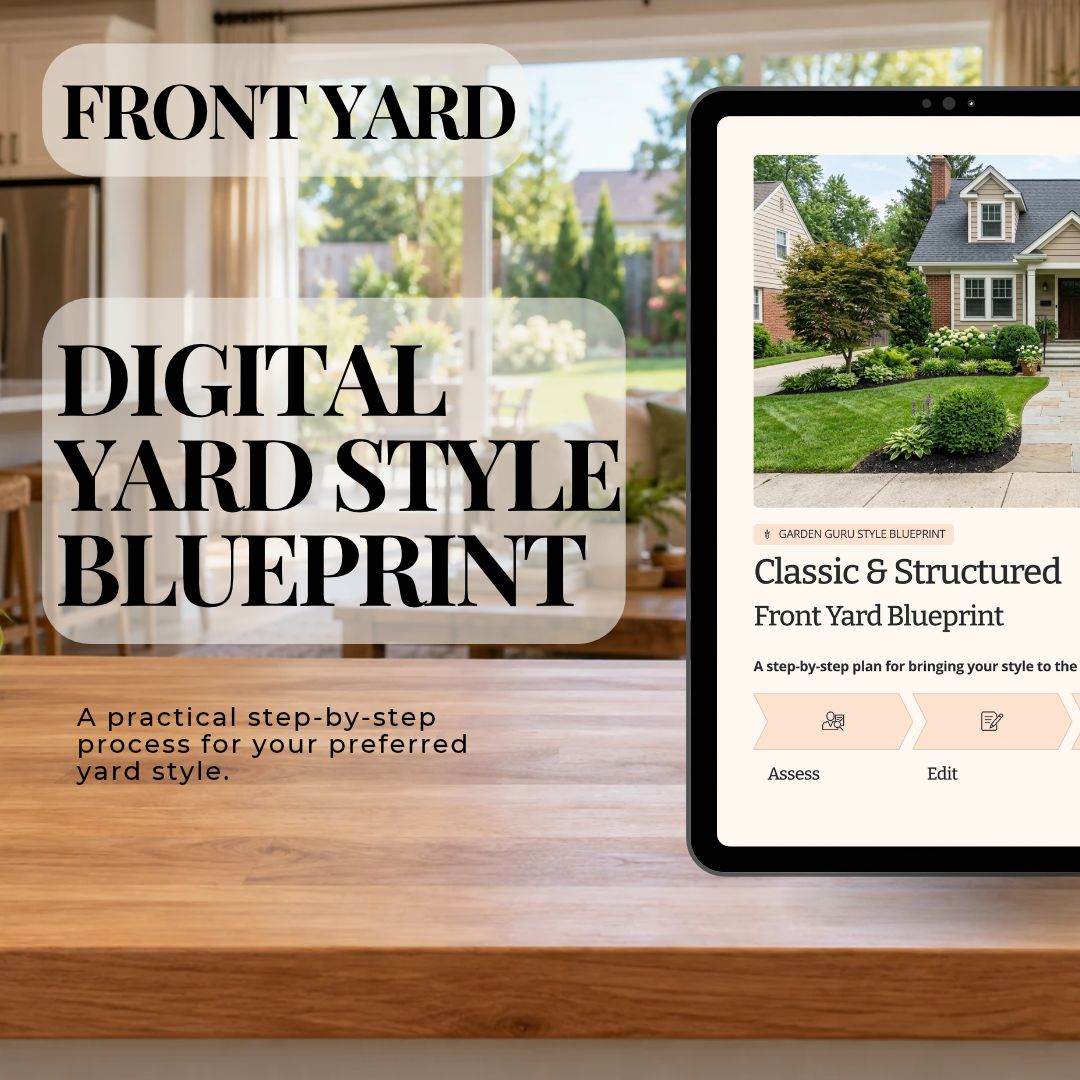
Classic & Structured — Front Yard Blueprint
$9
Thank you for your purchase!
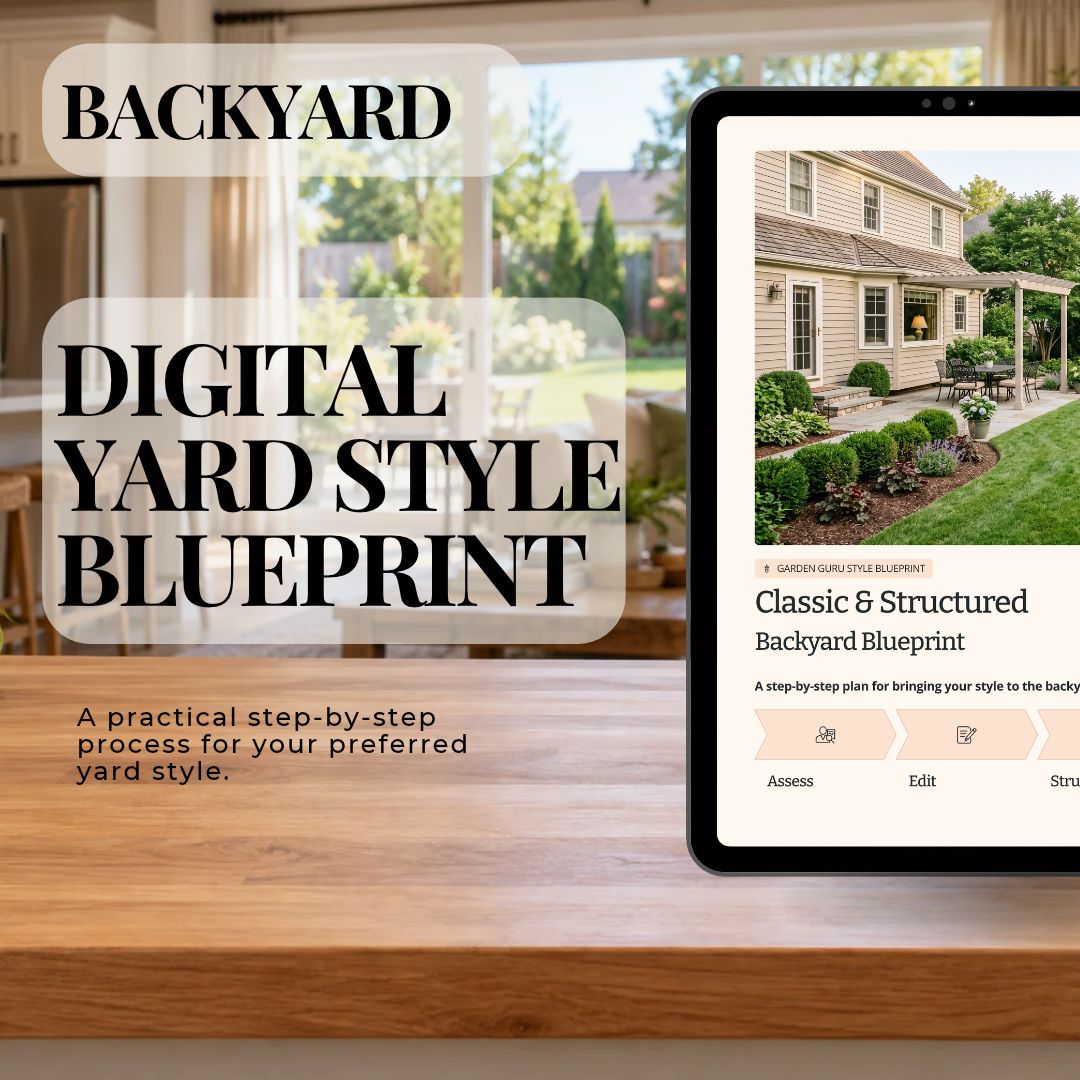
Classic & Structured — Backyard Blueprint
$9
Thank you for your purchase!
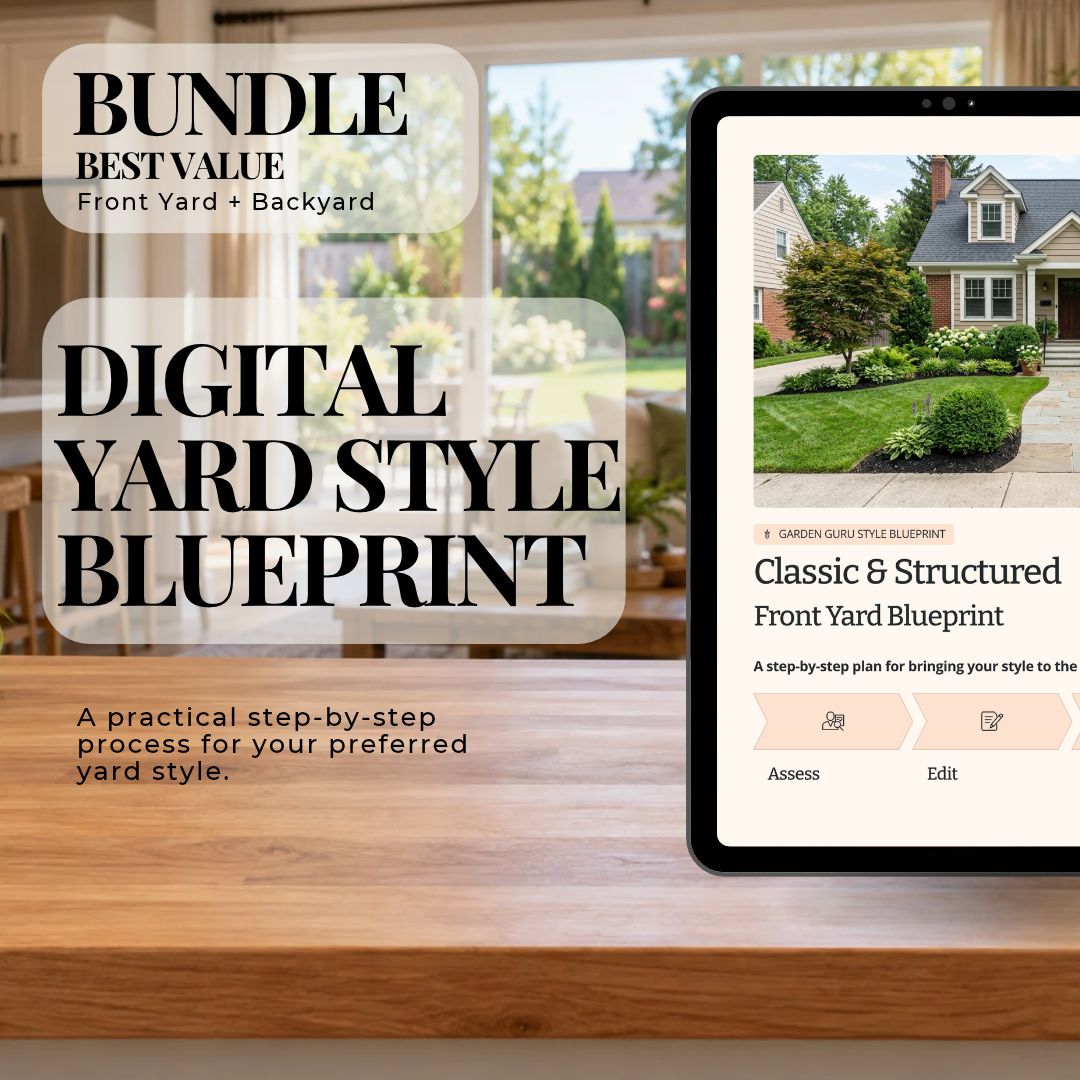
Classic & Structured — Front + Backyard Bundle
$16
Thank you for your purchase!
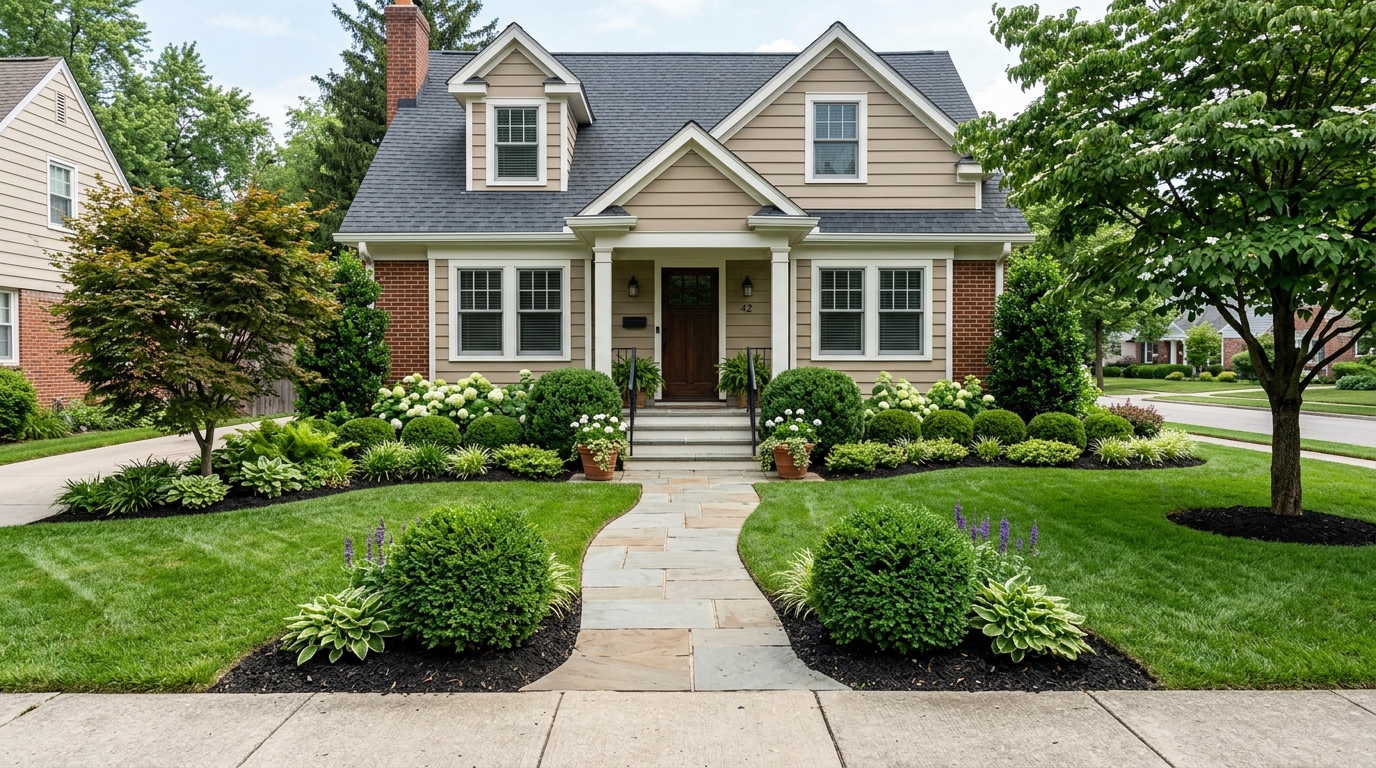
You want a yard that feels organized — not rigid.
Classic & Structured landscapes often look polished because the major relationships are easy to understand.
But the best ones aren’t simply symmetrical.
There’s hierarchy underneath the order:
- important areas receive stronger emphasis
- plant forms repeat instead of appearing once
- bed shapes feel deliberate
- foundation planting has clear layers
- symmetry is used selectively rather than everywhere
- color supports the structure instead of overpowering it
The Blueprints show you how to create that sense of order intentionally — without turning your yard into something stiff or overly formal.
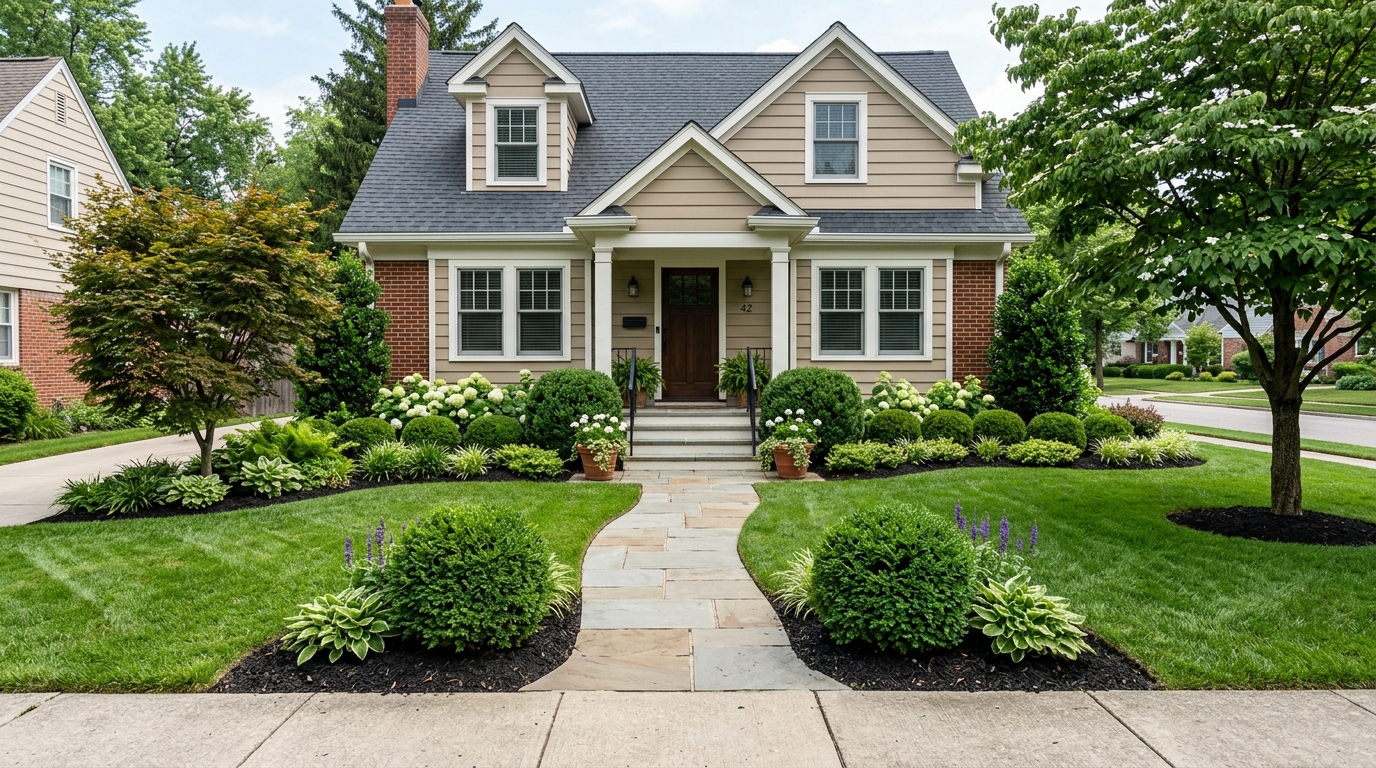
Front Yard Blueprint
Create a front yard that feels balanced, welcoming, and intentionally designed.
Use the Classic & Structured design language to improve:
Entry · Bed Shapes · Foundation Planting · Balance · Repetition · Color · Materials
You’ll learn how to:
- assess the front yard you already have
- decide what to keep, remove, reduce, or add
- create clearer planting beds and stronger edges
- emphasize the front entry without overdecorating it
- organize plants into useful structural roles
- use repetition to make the landscape feel connected
- use symmetry where it helps — without matching everything
- build layers that feel polished rather than flat
- turn the process into a practical first project
Includes
13-page digital Blueprint - Instant digital access after purchase
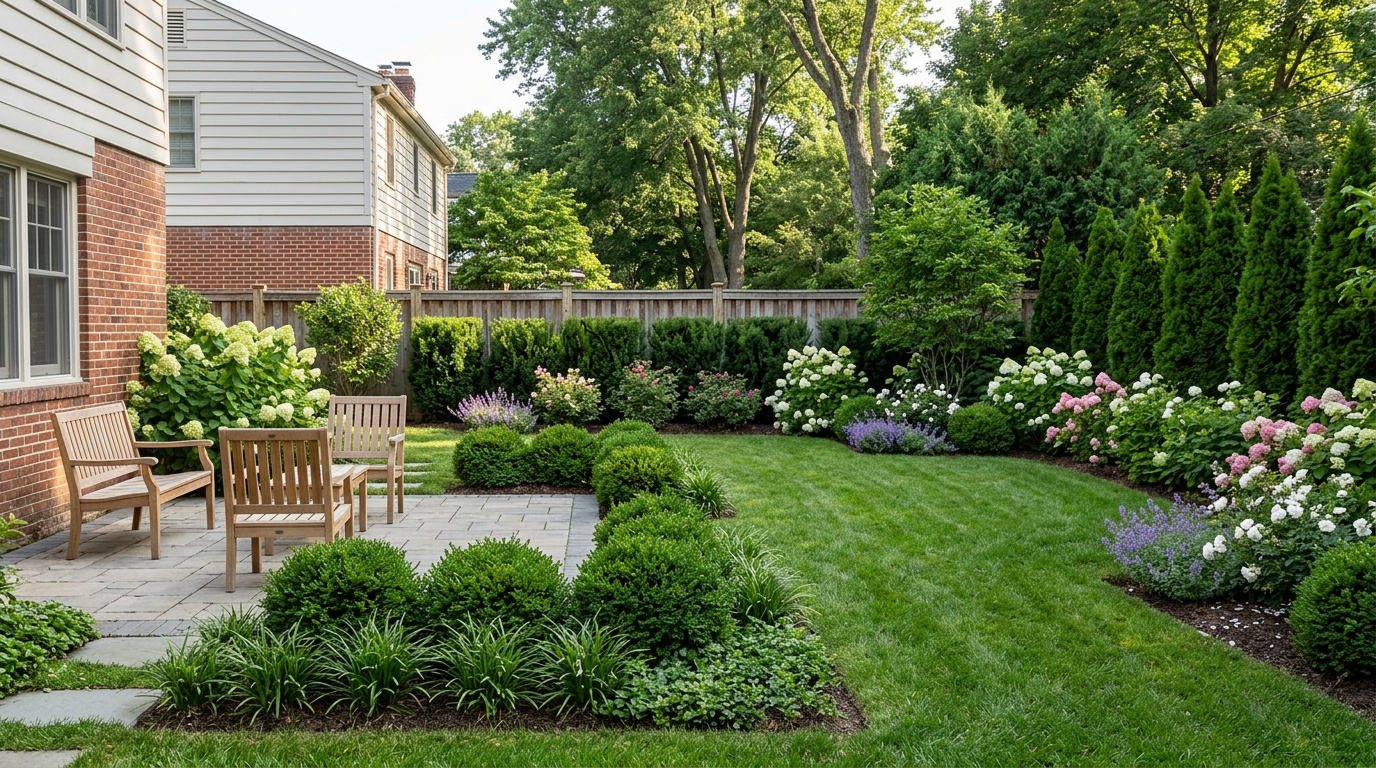
Backyard Blueprint
Create a backyard that feels organized, comfortable, and easy to use.
Use the Classic & Structured design language around:
Gathering Areas · Privacy · Circulation · Planting · Balance · Outdoor Living
You’ll learn how to:
- assess how your backyard actually functions
- organize gathering areas and circulation
- create privacy without enclosing the whole yard
- use repeated planting to connect separate spaces
- build structure around patios, lawns, and destinations
- balance planted areas with useful open space
- keep details and materials coordinated
- create order without turning the backyard into a formal garden
Includes
13-page digital Blueprint - Instant digital access after purchase
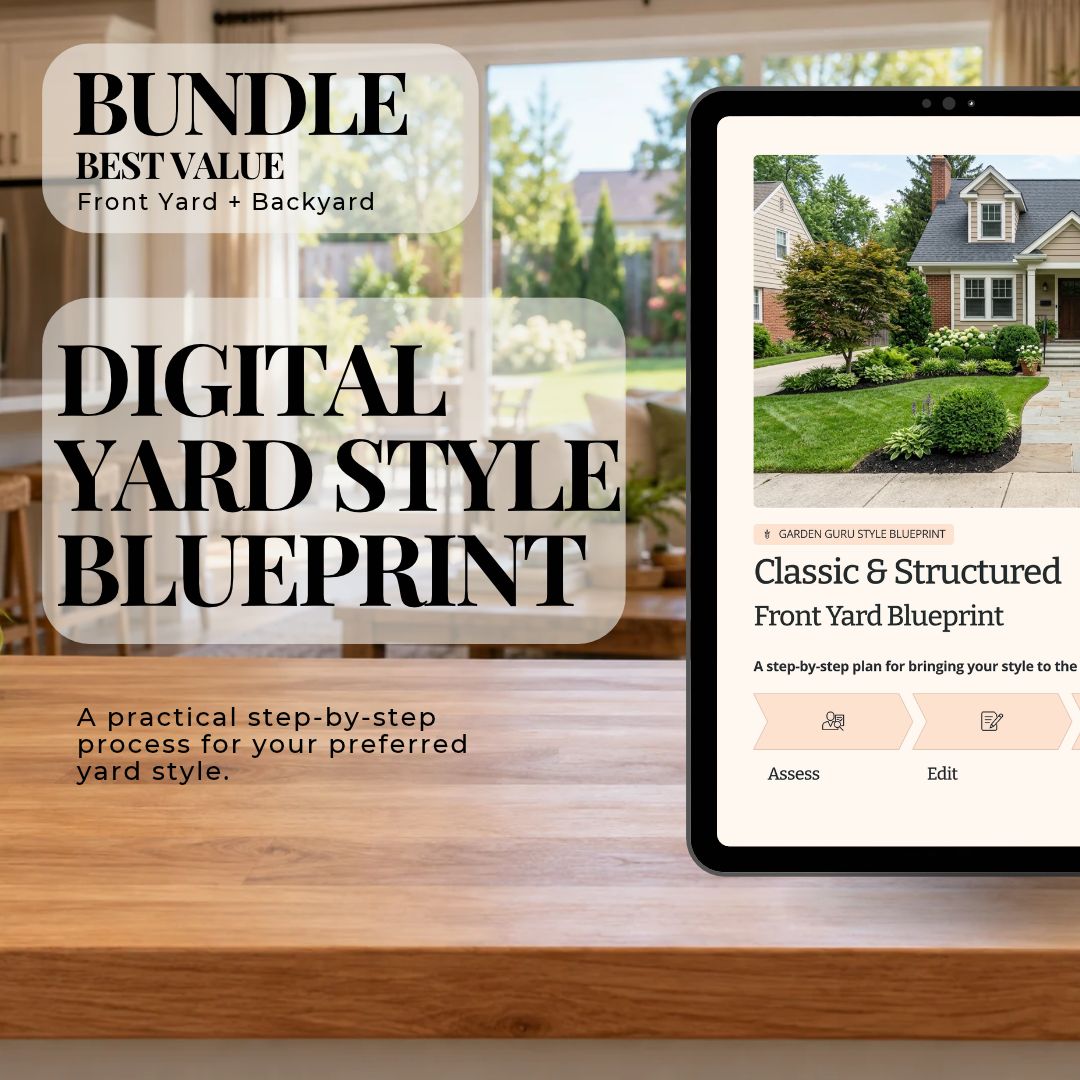
Front + Backyard Bundle
Carry one polished design language across the whole property.
If you eventually want both spaces to feel related, you don’t need to choose.
Get the complete Classic & Structured Blueprint set:
Front Yard Blueprint + Backyard Blueprint
Together, the two guides help you create consistency in:
- planting structure
- repetition
- hierarchy
- balance
- bed shapes
- color
- materials
- overall design direction
while still recognizing that the front and backyard have different jobs to do.
Includes Both 13-page Classic & Structured Blueprints
*Best value if you plan to work on both areas.
A repeatable process you can actually use.
Page examples below
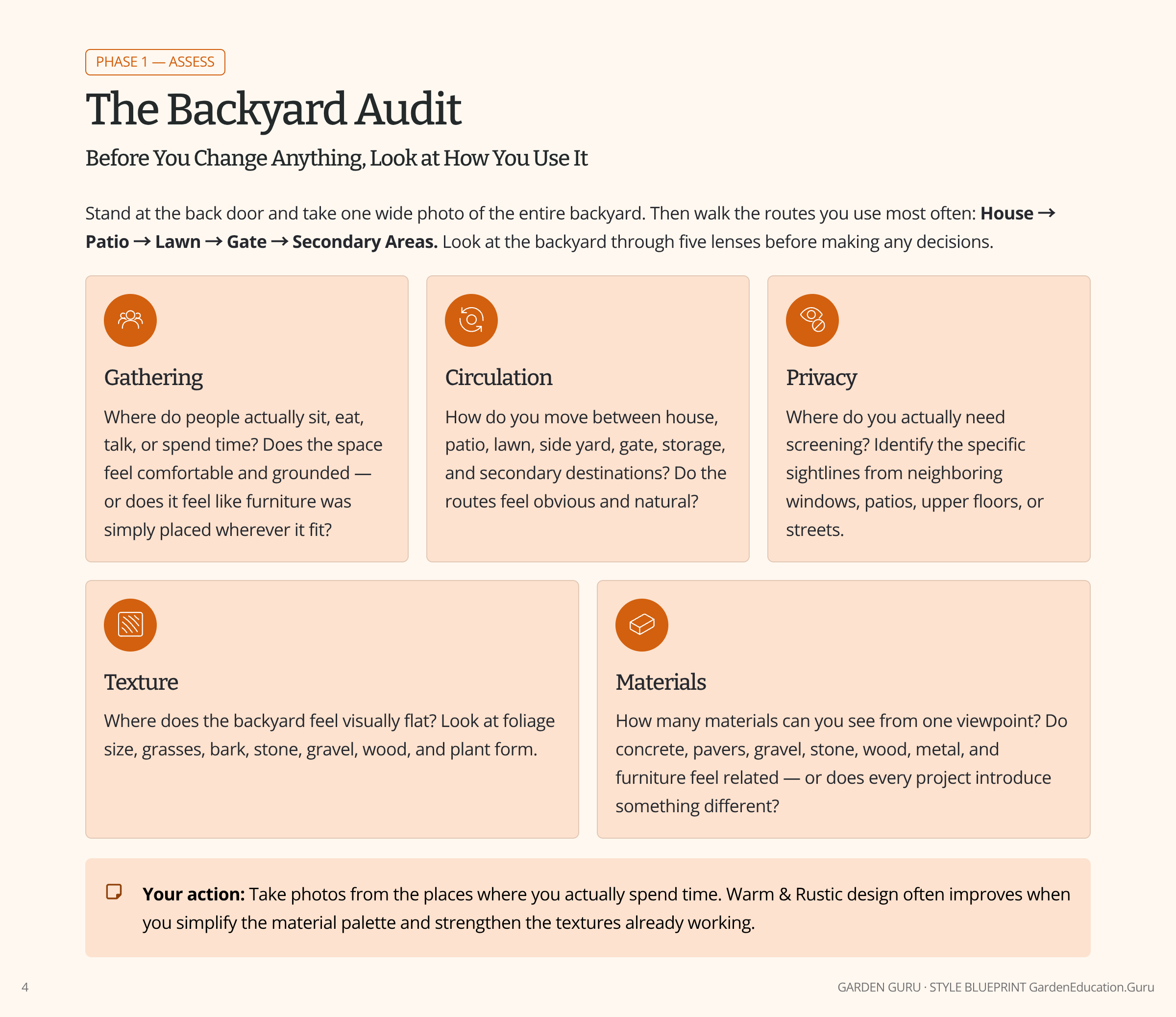
Assess what you already have
Learn how to look at your yard through the same design principles the style depends on.
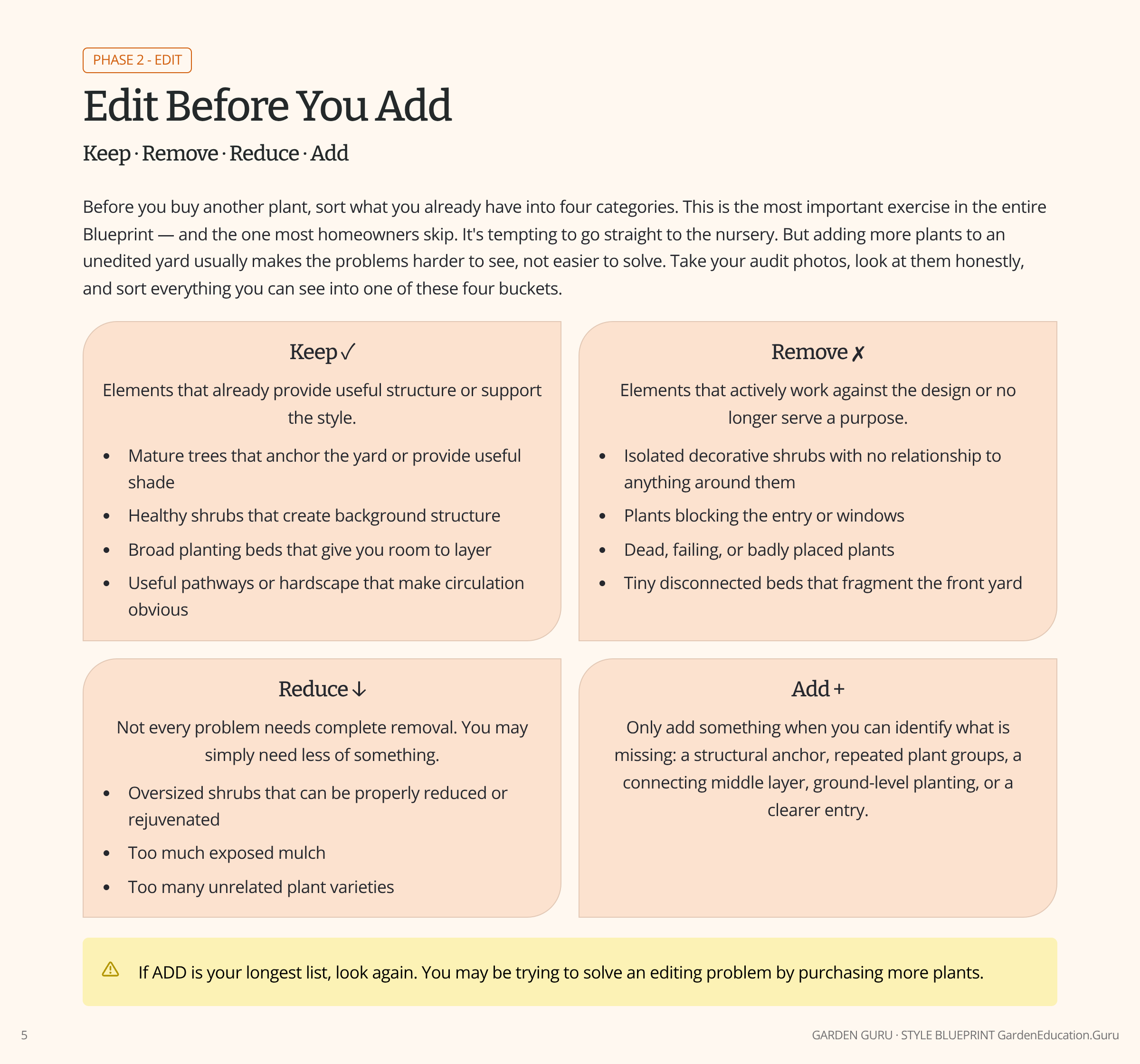
Edit before adding
Use Keep / Remove / Reduce / Add so another nursery trip isn’t automatically the answer.
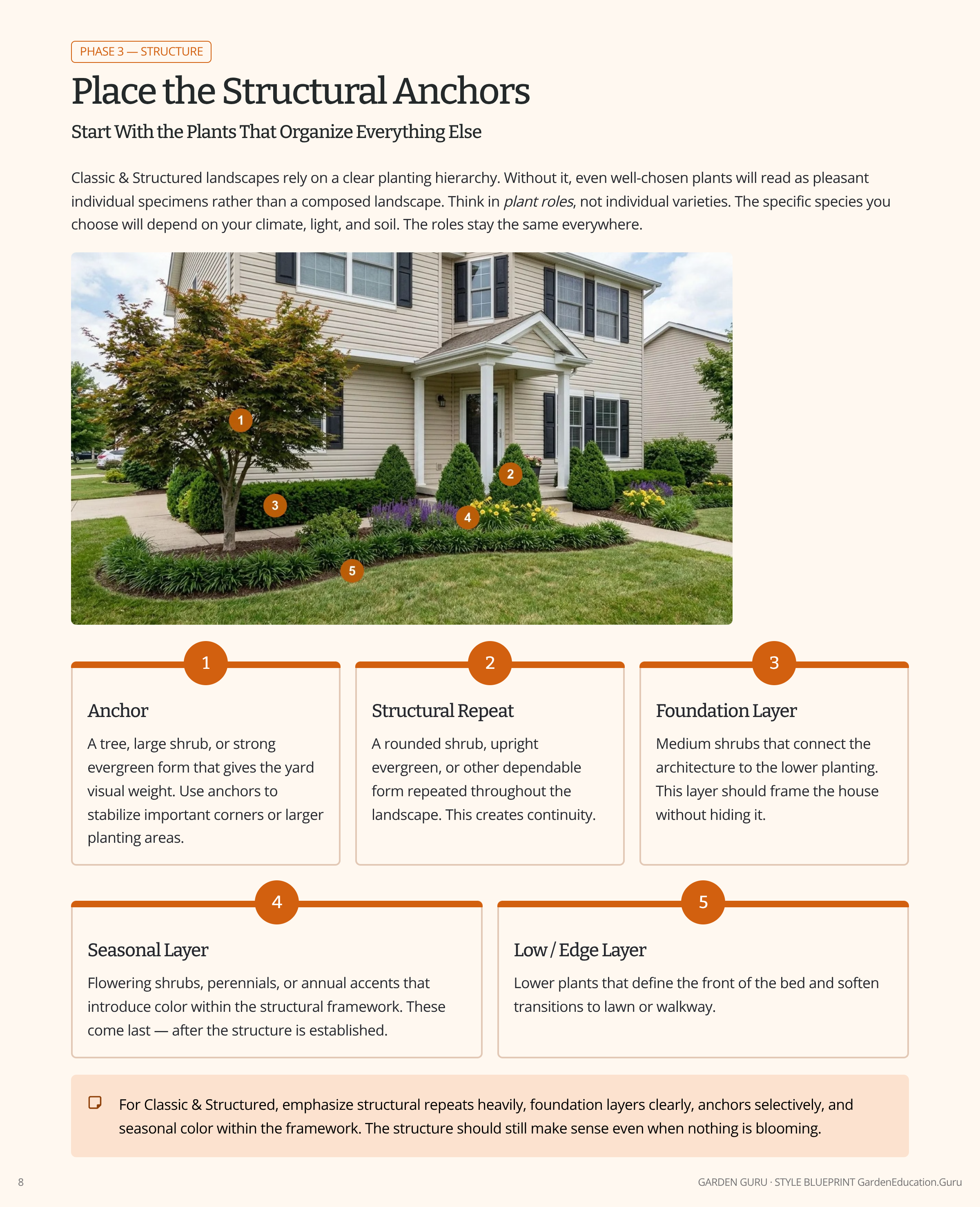
Build the structure
Clarify entries, bed shapes, circulation, gathering areas, privacy, and the major framework that organizes the yard.
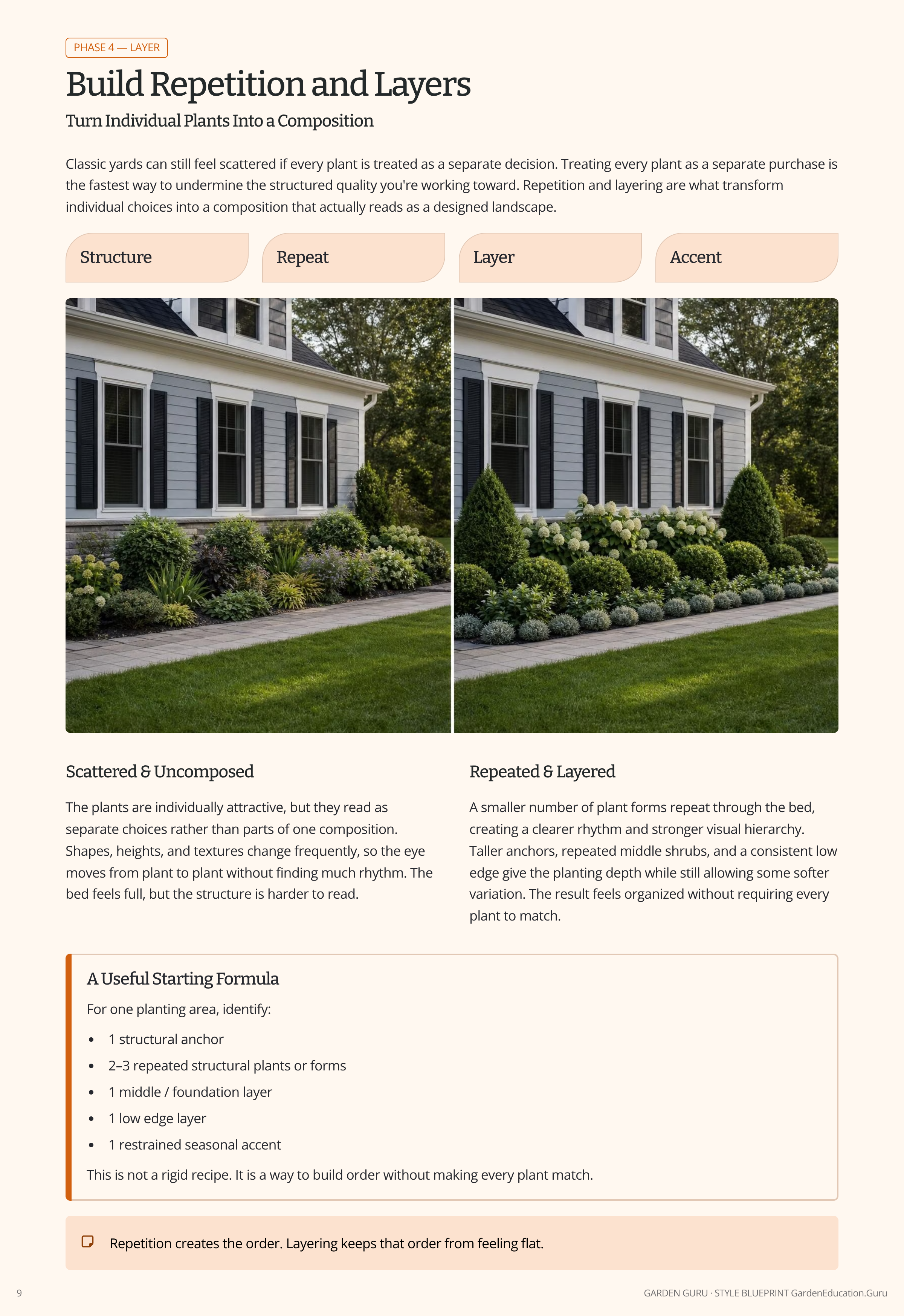
Layer the planting
Use repeated shrubs, middle layers, lower plants, and selective focal elements to create depth without losing clarity.
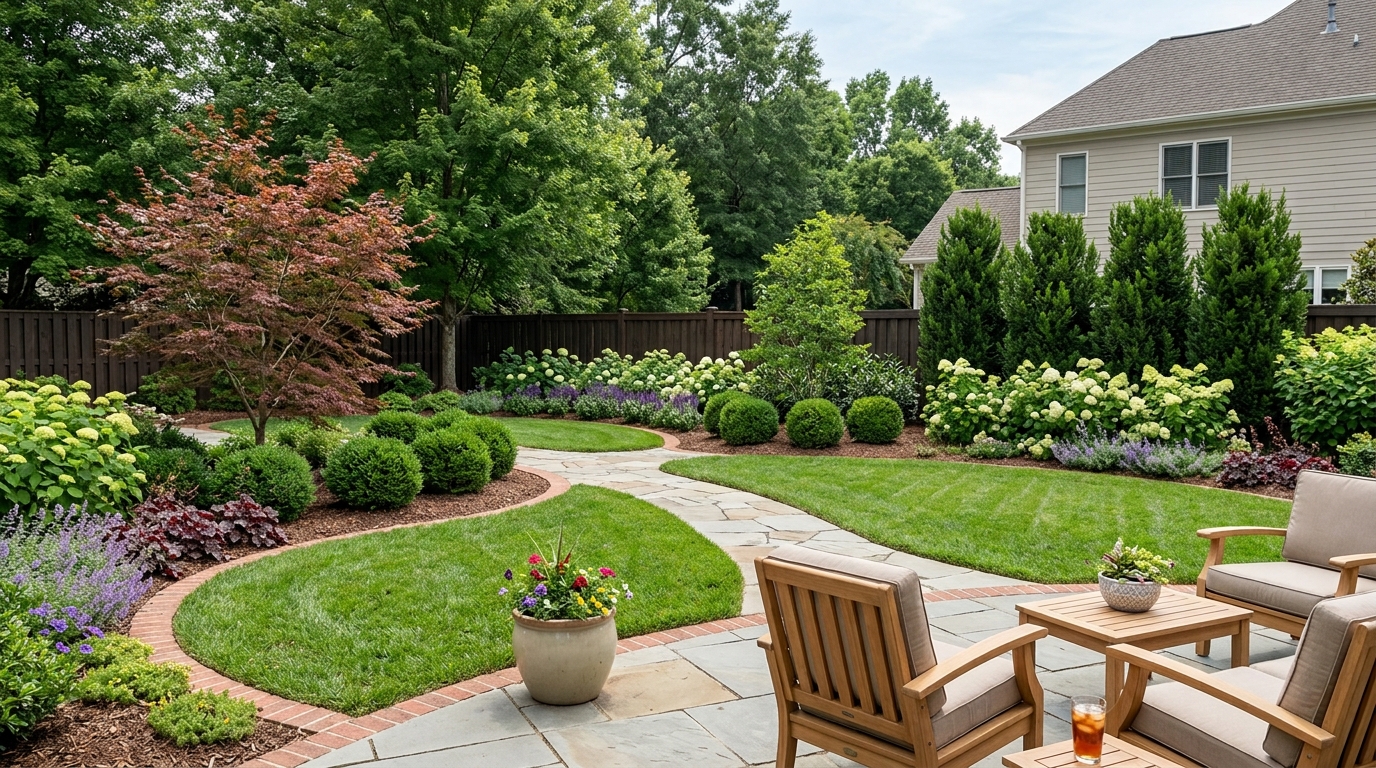
The biggest mistake with this style?
Thinking structure means symmetry everywhere.
Classic & Structured landscapes often use symmetry — but they don’t depend on matching every plant, bed, or feature.
The strongest examples use:
- clear hierarchy
- repeated plant forms
- balanced visual weight
- selective symmetry around important areas
- layered planting
- enough variation to keep the yard feeling natural
Too little structure can make the yard feel loose and disconnected.
Too much symmetry can make it feel stiff.
The Classic & Structured Blueprints show you how to find the middle.
Balanced, not mirrored. Structured, not stiff.
WHO THIS IS FOR
This Blueprint is a good fit if…
- you know you’re drawn to Classic & Structured landscapes
- your yard feels loose, disconnected, or unfinished
- you like order but don’t want a formal estate garden
- you want stronger foundation planting
- you like repeated shrubs, clear bed shapes, and balanced composition
- you want symmetry used selectively rather than everywhere
- you want principles you can adapt to your climate and budget
- you prefer improving the yard gradually instead of starting over
And it may not be the right product if…
You want someone to look at your exact property and tell you specifically what should stay, move, change, or be added.
That’s what the Garden Guru Yard Consultation is for.
ALREADY HAVE THE FREE STYLE GUIDE?
This is the next step.
Your free Classic & Structured Style Guide helps you understand the look.
The Blueprint helps you apply it.
Free Style Guide
Understand the style
Blueprint
Use the style
Yard Consultation
Apply the thinking to your specific property
No. The Blueprint teaches plant roles, repetition, balance, layering, and design relationships. Exact plant choices should fit your climate, light, soil, moisture, and available mature space.
No. Classic & Structured design often improves by strengthening what already exists — clarifying bed shapes, repeating successful plants, creating stronger layers, and reducing distractions. The Blueprint starts with the yard you already have.
No. The Blueprint teaches you how to apply the Classic & Structured style in a wide range of ordinary residential yards. For property-specific recommendations, use the Garden Guru Yard Consultation.
A digital Garden Guru Blueprint you can view electronically and reference while planning your yard.
No. Each Blueprint works independently. If you plan to improve both areas, the bundle gives you the complete Classic & Structured system while adapting the principles to the different jobs your front and backyard need to do.
YOUR STYLE. YOUR YARD. YOUR NEXT STEP.
Ready to put Classic & Structured into practice?
Choose the area you want to work on first — or get both and carry one balanced, intentional design language across your property.
Classic & Structured — Front + Backyard Bundle
Get both 13-page Classic & Structured Blueprints and create one balanced, cohesive design language across your front yard and backyard with practical step-by-step guidance.
$16
Thank you for your purchase!
Looking for help planning the bigger picture?
The Fix My Yard Workbook helps you step back, identify what isn’t working, establish priorities, and turn a yard full of ideas into a plan.